

Creative Writing Prompt: If my current emotions were the weather, what would the forecast look like? —an IFS take.
The gusts rattle the windows. You hear them before you feel them, but you feel it deep in your body. The thunder beats in your chest-skipping your breath.
I choose to rock in the chair on the porch. I feel the humiidity on my skin. The thunder in my chest. The wind against my body. Somehow, I find myself I the uproar.
I am used to the uproar. I know the panic. I do not lose myself in the fear. Now I am centered, rocking, and breathing. The storm is just a storm and I can see the beauty in it. I am myself. I have myself. I am whole.
—Em 7/23/26
Somatic EMDR vs. Traditional EMDR: How the Body Shows Up in Every Phase
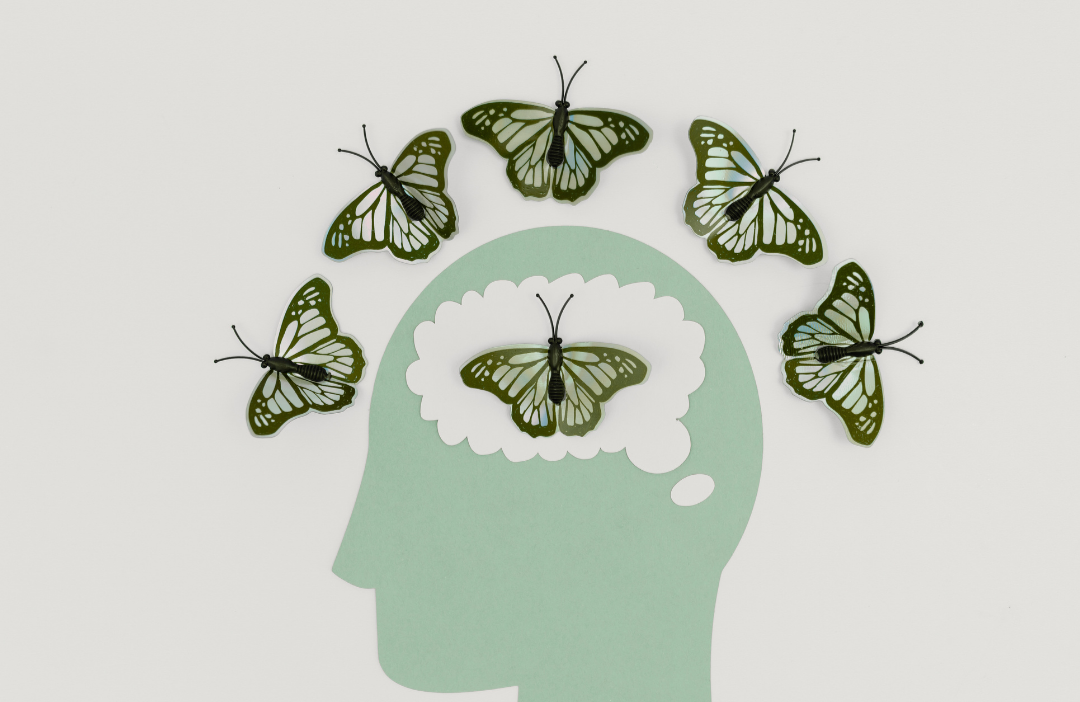
EMDR is often described in terms of its 8-phase structure — a clear, replicable protocol that's part of why it's one of the most studied trauma treatments available. But that structure can make it easy to overlook something important: the body is present in every single phase, not just the "body scan" step near the end.
Somatic EMDR doesn't throw out the 8-phase model. It deepens it — asking the clinician (and client) to stay in ongoing contact with physical sensation from the very first conversation through final closure. This article walks through each phase of EMDR and shows where body awareness naturally belongs, and introduces one evidence-informed model, S.A.F.E. EMDR, that formalizes this integration.
A Quick Grounding: What Is EMDR?
EMDR (Eye Movement Desensitization and Reprocessing) was developed by psychologist Francine Shapiro in the late 1980s. It's built on the Adaptive Information Processing (AIP) model, which holds that the brain has a natural system for processing experience — but traumatic events can disrupt that system, leaving memories "stuck" along with their original emotional and physical charge. EMDR uses bilateral stimulation (eye movements, taps, or tones) alongside brief recall of a target memory to help the brain complete that stalled processing.
EMDR is delivered through eight distinct phases. Below, we'll walk through each one — and highlight why body sensation deserves attention throughout, not just at the traditional "body scan" checkpoint.
The 8 Phases of EMDR — and Where the Body Belongs in Each
Phase 1: History Taking
Traditional focus: The clinician gathers history, identifies target memories, current triggers, and treatment goals.
Where the body comes in: Even in this first conversation, the body is offering information. A somatically-attuned clinician notices things like shifts in breathing, posture changes, or subtle tension when certain topics come up — often before a client has language for what they're feeling. This early observation helps map where in the body a client tends to hold distress, which shapes the whole treatment plan.
Phase 2: Preparation
Traditional focus: Building coping skills, teaching the "safe/calm place" exercise, and explaining what to expect from processing.
Where the body comes in: This is where somatic-informed EMDR spends significantly more time than the standard protocol. Rather than a brief calming visualization, clients are taught to actually locate and describe physical sensations of calm or resource — noticing where safety "lives" in the body so they have something concrete to return to during processing. Skills like orienting to the room, grounding through the feet, or noticing breath are introduced here to widen what's sometimes called the client's window of tolerance before any distressing material is touched.
Phase 3: Assessment
Traditional focus: Identifying the target image, negative belief, desired positive belief, emotions, and a baseline distress rating (SUDs) tied to the memory.
Where the body comes in: Assessment traditionally includes identifying where in the body the disturbance is felt — but somatic-informed practice treats this as more than a formality. Clients are asked to get specific: is it tight, hot, heavy, buzzing? That felt sense becomes an active reference point that's tracked throughout reprocessing, not just noted once at the start.
Phase 4: Desensitization
Traditional focus: Sets of bilateral stimulation while the client briefly holds the memory, image, and associated disturbance in mind.
Where the body comes in: This is the heart of somatic integration. Rather than checking in only cognitively ("what are you noticing now?"), a somatic-informed clinician tracks physical cues throughout — shallow breathing, clenched hands, restlessness, or stillness — and may pace sets of bilateral stimulation more slowly, using the body's signals rather than the clock to guide when to continue or pause. The goal is to let activation in the nervous system move and discharge, rather than pushing through it.
Phase 5: Installation
Traditional focus: Strengthening the connection between the memory and a more adaptive, positive belief.
Where the body comes in: A positive belief that's only cognitive tends to feel less durable. Somatic-informed EMDR asks clients to notice how the new, adaptive belief feels in the body — a sense of expansion, warmth, or ease — helping the shift register as something felt, not just something known intellectually.
Phase 6: Body Scan
Traditional focus: Checking for any remaining physical tension connected to the target memory.
Where the body comes in: This phase already exists in standard EMDR, but it's often treated as a final checkbox — a quick scan to confirm nothing's left before moving on. Somatic-informed practice treats this phase with the same depth as desensitization itself: if tension remains, it's explored and processed rather than simply noted, since unresolved physical residue can signal the memory isn't fully reprocessed yet.
Phase 7: Closure
Traditional focus: Making sure the client leaves each session feeling stable, regardless of whether processing is complete.
Where the body comes in: Closure in somatic-informed EMDR deliberately includes time to return to a felt sense of calm or resource in the body — not just verbal reassurance. This might mean revisiting the grounding or resourcing skills from Phase 2 so the client's nervous system, not just their thinking, feels settled before ending the session.
Phase 8: Re-evaluation
Traditional focus: Reviewing progress at the start of the next session and identifying what still needs attention.
Where the body comes in: Reevaluation asks not just "how do you feel about that memory now?" but "how does your body respond to it now?" Lasting change is often measured by whether the old physical charge — the racing heart, the clenched jaw — has actually settled, not only whether the story feels different.
S.A.F.E. EMDR: An Evidence-Informed Somatic Model
One named approach that formalizes body-and-attachment-informed EMDR across all eight phases is Safety and Attachment Focused EMDR (S.A.F.E. EMDR), developed by EMDR trainer Deborah Kennard. It builds on Shapiro's original Adaptive Information Processing model and layers in four guiding principles — nonviolence, mindful awareness, compassionate assumption, and healthy boundaries — along with polyvagal-informed resourcing for safety and connection.
S.A.F.E. EMDR was specifically designed to address a common challenge in trauma treatment: clients with complex or relational trauma who need more scaffolding around safety and attachment before — and during — memory reprocessing. It maintains fidelity to the standard 8-phase EMDR protocol while giving clinicians a more explicit framework for weaving somatic and attachment-focused resourcing throughout, rather than treating the body as a single checkpoint.
It's worth being precise about the evidence here: S.A.F.E. EMDR inherits the strong research base behind core EMDR and the AIP model, since it doesn't deviate from the standard protocol's structure. However, the added attachment- and polyvagal-informed elements are newer and haven't been independently studied through randomized controlled trials to the same degree as EMDR itself. It's best understood as a clinically developed, EMDRIA-taught refinement of an already evidence-based treatment — not yet a separately validated protocol in its own right.
What the Broader Research Says
Traditional EMDR is one of the most extensively studied trauma treatments in existence. Systematic reviews and meta-analyses have found it significantly reduces PTSD symptoms, and it's recommended as a first-line PTSD treatment by major clinical bodies, including the VA/DoD Clinical Practice Guideline, the International Society for Traumatic Stress Studies, the UK's National Institute for Health and Care Excellence, and the Australian National Health and Medical Research Council. The American Psychological Association also includes EMDR among its recommended PTSD treatments.
One nuance worth knowing: some research has questioned whether the eye-movement component itself is essential to EMDR's effectiveness, versus the exposure and cognitive-reprocessing elements it shares with other trauma therapies. This doesn't undercut EMDR's overall effectiveness — reviews consistently show it works — it's more a question of which ingredient is doing the work.
Somatic additions to EMDR — whether through general somatic-informed practice or a named model like S.A.F.E. EMDR — draw on a growing body of nervous-system-focused research, including polyvagal theory. That said, some of the theoretical underpinnings, particularly certain polyvagal theory claims, remain debated within the scientific community, and body-based additions generally have a smaller independent research base than the core EMDR protocol. That doesn't mean they're ineffective — it means the formal evidence is still catching up to what many clinicians and clients report experiencing in session.
Why This Matters for Your Healing
Because the body is involved in every phase whether or not a clinician names it explicitly, working with a therapist who's trained to notice and work with those signals — rather than only the eighth-phase checklist — can make reprocessing feel more complete and less likely to leave residual physical tension behind. This is especially relevant if you:
Experience physical symptoms — chronic tension, migraines, digestive issues, fatigue — with no clear medical cause
Struggle to access clear narrative memories, which is common with early childhood or preverbal trauma
Feel disconnected from your body or notice dissociation during stress
Get easily overwhelmed or flooded by strong emotion and need a slower, more regulated pace
Start Your Healing Journey
Whether your healing path leans more cognitive, more somatic, or a blend of both, the goal is the same: helping your mind and body process what happened so it stops running the show in the present. At Myers Psychotherapeutic Services, our therapists can help you figure out which approach — or combination of approaches — fits where you are right now.
Gestalt Therapy vs. ACT: History, Science, and What Happens When They Meet

Two of the most influential approaches in modern psychotherapy come from completely different intellectual worlds. Gestalt therapy grew out of psychoanalysis, theater, and Zen philosophy in the mid-20th century. Acceptance and Commitment Therapy (ACT) emerged decades later from behavioral science and a research program on human language. Yet today, many clinicians use ideas from both in the same room with the same client.
This guide breaks down where each therapy came from, what the research actually says about how well it works, and what to weigh if you're considering blending the two in practice.
What Is Gestalt Therapy?
Origins and History
Gestalt therapy was developed by psychiatrist Fritz Perls and his wife, psychologist Laura Perls, beginning in the 1930s. Gestalt therapy originated in Germany in the 1930s, devised by psychoanalysts Frederick (Fritz) Perls and his wife Laura, who broke away from Freud's analytic theory and created their own synthesis of ideas. Perls was trained in traditional psychoanalysis, but his dissatisfaction with certain Freudian theories and methods led him to develop his own system of psychotherapy, influenced by psychoanalysts Karen Horney and Wilhelm Reich.
The Perls fled Nazi Germany in 1933 and settled in South Africa, where they set up a psychoanalytic training institute and developed the fundamental principles of Gestalt therapy. After World War II, Fritz and Laura moved to New York, where they continued developing their approach, working alongside other prominent psychological thinkers of the era. This culminated in the 1951 publication of the seminal work "Gestalt Therapy: Excitement and Growth in the Human Personality," written by Fritz Perls in collaboration with social thinker Paul Goodman and psychologist Ralph Hefferline.
The name "Gestalt" borrows from Gestalt psychology, a German school of perception research. A useful way to think about the term: a gestalt is something which is greater than the sum of its parts — to understand an event, a person, or a situation, you have to consider the entire configuration rather than isolated pieces. Perls applied this whole-person lens to therapy itself, treating the client's thoughts, emotions, body, and relationships as one interconnected field rather than separate symptoms to fix.
Core Concepts and Techniques
Gestalt therapy incorporates ideas from body psychotherapy, psychoanalysis, humanistic and existential philosophy, Gestalt psychology, psychodrama, and Eastern spiritual practices. A central addition was the emphasis on the "here and now" — a focus on current experience, including the current experience of the past, drawing partly from Zen thought introduced by psychologist Paul Weisz.
The core of the Gestalt therapy process is enhanced awareness of sensation, perception, bodily feelings, emotion, and behavior in the present moment, with strong emphasis on relationship and contact between therapist and client. Gestalt therapy fosters personal growth through self-awareness and self-support, enabling creative contact with people and the environment, with the therapeutic relationship treated as central to healing.
The technique most people associate with Gestalt therapy is "the empty chair," in which a client speaks to an imagined person (or a disowned part of themselves) sitting in an empty chair, then often switches seats to respond as that other voice. This and related "chairwork" methods are designed to surface unresolved feelings — what Gestalt therapists call "unfinished business" — and bring them into present, embodied awareness rather than just talking about them abstractly.
It's worth noting that Perls's own confrontational, sometimes theatrical style is viewed differently today than it was in the 1960s. Contemporary Gestalt training has moved away from his more provocative methods, even as the underlying theory remains influential.
The Science: What Does the Evidence Say?
Gestalt therapy's evidence base is real but thinner and more mixed than newer, manualized therapies — partly because Gestalt resists rigid manualization by design, which makes it harder to standardize for randomized controlled trials (RCTs).
A few key findings:
A systematic review of Gestalt therapy's empirical evidence found support across a range of applications, though the field has historically lacked large RCTs. A systematic review of 11 studies found Gestalt therapy helped anxious parents of primary school children reduce anxiety, become more mindful, and be kinder to themselves; other research found it effective in helping students develop through a focus on personal experience and responsibility.
The empty chair technique specifically has been compared directly against cognitive-behavioral methods. One review concluded there isn't evidence to support the idea that Gestalt empty chair dialogue is more effective than cognitive restructuring for resolving lingering angry feelings, while still affirming the value of addressing and expressing anger constructively for personal growth. A separate RCT comparing the two interventions head-to-head reached similar territory: researchers hypothesized the Gestalt empty chair would outperform rational-emotive cognitive restructuring for resolving lingering anger, and trained four therapists to deliver both approaches to ten clients each.
More broadly, chair work techniques — which Gestalt popularized but which now appear across multiple modalities — have a stronger evidence base than Gestalt therapy as a whole. Recent meta-analytic evidence shows chairwork is effective as a stand-alone intervention, though in practice it's typically folded into broader treatment packages like emotion-focused therapy, schema therapy, or trial-based cognitive therapy.
Bottom line on Gestalt: there's encouraging evidence, especially for chairwork as a technique, but the overall field has fewer large, rigorous RCTs than CBT-derived therapies, and head-to-head comparisons haven't consistently shown Gestalt techniques to outperform alternatives.
What Is Acceptance and Commitment Therapy (ACT)?
Origins and History
ACT is a much younger therapy, developed by psychologist Steven C. Hayes starting in the 1980s. Acceptance and Commitment Therapy was developed in the 1980s by Hayes, who sought a new approach to psychological suffering that went beyond simple symptom reduction. The foundational concepts were formally introduced in Hayes's 1987 article "A contextual approach to therapeutic change: Toward a functional analysis of human language," published in Behavior Therapy — though the approach wasn't yet named ACT. The term began appearing in print in the early 1990s, with the first major formal use in the 1999 book "Acceptance and Commitment Therapy: An Experiential Approach to Behavior Change."
Unlike Gestalt, which drew on psychoanalysis and humanistic philosophy, ACT comes directly out of behavioral science. Theoretically, ACT is rooted in behavior analysis and the pragmatic philosophy of Hayes's functional contextualism, and is guided by his Relational Frame Theory — a comprehensive account of human language derived from behavior analysis and B.F. Skinner's radical behaviorism. ACT is generally classified as part of the "third wave" of behavior therapy, following classical behaviorism and then cognitive-behavioral therapy (CBT).
Core Concepts and the Underlying Science
The theoretical engine behind ACT is Relational Frame Theory (RFT), a behavioral account of how humans acquire language and meaning. RFT explains how language and cognition shape behavior — unlike traditional behavioral models that focus on direct conditioning, RFT proposes that humans derive meaning by relating words and concepts to each other in complex ways. For example, a child taught that spiders are dangerous may later fear other small, crawling insects even without direct experience with them.
Rather than targeting symptoms directly, ACT's goal is different: the main purpose of ACT is to relieve human suffering by helping clients live a vital, valued life. ACT integrates behaviorism, cognitive psychology, and mindfulness traditions to enhance what's called "psychological flexibility," emphasizing acceptance of difficult internal experiences over avoidance, paired with values-driven action.
In practice, this means ACT therapists help clients:
Accept difficult thoughts and feelings rather than fighting them
Defuse from unhelpful thoughts (observing a thought as just a thought, not a literal truth)
Stay present and aware
Clarify personal values
Commit to behavior aligned with those values, even when it's uncomfortable
The Science: What Does the Evidence Say?
ACT has a notably stronger and more recent research base than Gestalt therapy, in large part because it was designed from the outset to be tested through controlled trials.
On depression and anxiety, multiple recent meta-analyses converge on similar findings. One meta-analysis of ten randomized clinical trials found ACT had a significant effect on depressive symptoms and anxiety symptoms among people with depression, along with a positive effect on psychological flexibility. A separate, more recent meta-analysis reached a comparable conclusion: ACT appears to significantly improve depressive symptoms, anxiety, and psychological flexibility in individuals with depression, according to GRADE-assessed evidence ranging from very low to moderate certainty, though its effects on automatic thoughts and its acceptability require further study. That same analysis found ACT showed a small-to-moderate effect on anxiety at both post-treatment and follow-up, with certainty of evidence somewhat limited by inconsistency and small sample sizes across trials.
For adolescents specifically, a large meta-analysis offers a useful nuance: across 27 RCTs with 2,860 participants, ACT did not outperform CBT, but it was significantly more effective than other active controls (like treatment as usual) for depression, and more effective than inactive controls across all outcomes. Improvements in psychological flexibility significantly predicted reductions in both depression and anxiety. That last point matters: meta-regression results support the idea that increases in psychological flexibility are one of the main mechanisms of change for symptom improvement in adolescents, even over the long term for depression.
ACT's evidence base also extends well beyond mood disorders. Recent reviews have found preliminary support for ACT in treating stress, anger and aggression problems, obsessive-compulsive behavior, anorexia nervosa, trichotillomania, attention-deficit/hyperactivity symptoms, and disordered eating and chronic pain. It's also been studied in medical populations: a systematic review and meta-analysis found ACT is associated with improvements in anxiety, depression, and psychological flexibility in patients with cancer.
Bottom line on ACT: the evidence is broader, more recent, and generally more rigorous than Gestalt's, with consistent findings that psychological flexibility is the mechanism driving outcomes. That said, ACT doesn't clearly outperform CBT in head-to-head comparisons, and much of the evidence is still rated low-to-moderate certainty due to bias risks common across psychotherapy research (small samples, lack of blinding, etc.).
Combining Gestalt and ACT in Practice: Pros and Cons
In real clinical settings, many therapists don't treat these as rigid, mutually exclusive systems. Both ultimately emphasize present-moment awareness and direct experience over abstract analysis, which makes them more compatible than they might initially seem on paper — one is rooted in humanistic/experiential tradition, the other in behavioral science, yet they converge on similar territory. In fact, a narrative review specifically mapping how Chair Work techniques are used across different therapeutic models found that Gestalt Therapy, Schema Therapy, Emotion-Focused Therapy, Transactional Analysis, cognitive-behavioral approaches, and Acceptance and Commitment Therapy all draw on similar chair-based methods, each with their own clinical objectives and procedural variations. This existing cross-pollination is part of why integrating the two isn't a fringe idea.
Potential Pros of Combining Them
Experiential depth meets a values-driven roadmap. Gestalt's strength is helping clients viscerally experience and process emotion in the room (through chairwork, body awareness, and present-focused dialogue). ACT's strength is helping clients translate that awareness into concrete, values-aligned action afterward. Used together, a client might use an empty-chair dialogue to access and process an avoided emotion, then use ACT's values clarification work to decide what to do about it.
Shared philosophical ground reduces friction. Both approaches prioritize present-moment, direct experience over purely intellectual insight, and both treat the relationship between thought/feeling and action as something to be worked with experientially rather than just discussed. This overlap means the two don't feel contradictory to most clients moving between techniques.
Chairwork already has a track record inside ACT-adjacent and other experiential frameworks. Because chair-based techniques are already used across multiple modalities, including ACT itself in some applications, borrowing Gestalt's chairwork doesn't require inventing a new theoretical bridge — clinicians already have a path for doing this with some grounding in the literature.
Flexibility for different client needs. Some clients respond strongly to embodied, dramatic techniques (Gestalt); others find that style overwhelming or artificial and prefer ACT's more structured, mindfulness-and-values framework. A therapist fluent in both can adapt in real time rather than forcing every client through one mold.
Potential Cons of Combining Them
Theoretical tension underneath the surface. Gestalt emerged from psychoanalytic and humanistic-existential roots; ACT is explicitly behavioral and grounded in a specific account of language (RFT). Blending techniques without understanding why each one works risks creating an eclectic mix that "feels" coherent to the therapist but lacks a clear theoretical rationale for the client's specific presentation.
Evidence base mismatch. ACT has a substantially larger and more recent body of RCT evidence than Gestalt therapy. Layering Gestalt techniques (like empty chair work) into an ACT protocol means introducing components with comparatively weaker direct evidence, which can complicate treatment planning, insurance documentation, or outcome tracking in evidence-based settings.
Risk of diluting ACT's structured protocol. Part of what makes ACT effective in trials is its relatively consistent structure around psychological flexibility processes (acceptance, defusion, values, committed action, etc.). Heavily integrating Gestalt's more improvisational, in-the-moment style could blur that structure, making it harder to know which component is actually driving a client's progress — and harder to study or replicate.
Training and skill requirements. Gestalt chairwork, done well, requires significant clinical skill to avoid retraumatizing a client or creating a performative rather than genuinely therapeutic experience. ACT requires fluency in its own technical language (defusion, values work, RFT-informed metaphors). Few training programs teach both deeply, so therapists combining them may be working from partial training in one or both approaches.
Client confusion about the "model." Clients in longer-term therapy sometimes do better with a consistent framework they can understand and predict (e.g., "we're working on accepting this feeling and acting on my values"). Mixing in Gestalt's more dramatic, present-tense dialogue work without explaining why can feel disorienting if not framed clearly.
The Takeaway
Gestalt therapy and ACT come from different eras and different scientific traditions, but they're not philosophically incompatible. Gestalt offers a rich, embodied way to help clients access and process emotion in the moment; ACT offers a well-researched, values-based structure for what to do with that awareness afterward. Combining them can work well in skilled hands, particularly because chairwork techniques already cross modalities in the literature — but it requires a therapist who understands the theoretical "why" behind each technique, not just the "how." For clients evaluating either approach (or a therapist who blends them), it's reasonable to ask directly how the therapist integrates the two and what evidence supports that combination for the specific concern being treated.
This article is for informational purposes only and is not a substitute for professional mental health advice. If you're considering therapy, a licensed clinician can help you determine which approach — or combination of approaches — fits your needs.

How to Support a Loved One with Chronic Illness: What to Say, What to Do, and What to Avoid

Part 2 of Our Chronic Illness Series
For many people living with a chronic illness, receiving a diagnosis isn't the beginning of their journey—it's the end of a very long search for answers. Research shows that, on average, people with many chronic and complex conditions spend years seeking a diagnosis, often seeing multiple healthcare providers before their symptoms are finally recognized. By the time a diagnosis arrives, they've frequently been living with pain, exhaustion, uncertainty, or other life-altering symptoms for years.
That moment can hold two seemingly contradictory truths at once. It may bring immense relief—a name for what they've been experiencing, validation that their symptoms are real, and the possibility of appropriate treatment. At the same time, it can also bring grief, fear, and the reality that life may never look quite the way it once did.
For the people who love them, the diagnosis often feels like the beginning of a new reality. When someone you care about receives a chronic illness diagnosis—especially at a young age—the ground can seem to shift beneath everyone's feet. You may feel scared, helpless, or desperate to fix something that cannot simply be fixed. You want to support them, but you're not always sure how. You say something that comes out wrong. You offer help in ways that feel awkward. You worry that whatever you do, it isn't enough.
Those feelings are valid. They're also more common than you might think.
Research published in Families, Systems & Health found that family members and close friends supporting adults with chronic illness often carry significant emotional burdens of their own, including worry about the future, frustration, and feelings of helplessness. A study published in BMC Family Practice found that 92% of family members interviewed reported being emotionally affected by their loved one's illness, with worry and frustration among the most commonly described emotions. Many also shared that they kept these feelings to themselves because they didn't know who to talk to.
The reality is that chronic illness rarely affects just one person. It ripples outward through families, friendships, workplaces, and households. When someone develops a chronic condition at a young age, those ripples can feel especially profound. Loved ones may grieve the future they had imagined, struggle to understand invisible symptoms, or feel uncertain about how to support someone whose daily reality has changed so dramatically.
This post is for you—the friend, partner, parent, sibling, or loved one who wants to show up with greater understanding. Supporting someone with a chronic illness isn't about having the perfect words or fixing what can't be fixed. It's about learning how to be present in ways that truly help.
First, Understand What Your Loved One Is Really Dealing With
Before we talk about what to do, it helps to sit with what chronic illness actually means. The CDC defines chronic illness as conditions that last one year or more and require ongoing medical attention, limit activities of daily living, or both. The list includes conditions as varied as lupus, Crohn's disease, rheumatoid arthritis, multiple sclerosis, fibromyalgia, and diabetes — each carrying its own unpredictable rhythms.
One of the most disorienting parts for loved ones is that chronic illness is often invisible. Someone might look "fine" on the outside while managing significant pain, fatigue, or cognitive symptoms on the inside. This invisibility can make it harder to know what's needed, and easier to accidentally minimize what your loved one is experiencing.
Learning about their specific condition — not so you can offer advice, but so you can better understand their reality — is one of the most quietly powerful things you can do.
Practice Active Listening and Mean It
Active listening is a phrase that gets tossed around a lot, but in the context of chronic illness support, it carries real weight.
The British Heart Foundation describes active listening as giving your complete, undivided attention to another person — resisting the urge to interrupt, offer reassurance, or jump to solutions, and instead letting the other person take the lead. It includes making small acknowledgments ("I hear you," "that sounds exhausting") and staying focused on what they're actually saying rather than planning your next response.
For someone living with chronic illness, simply being heard — without judgment, without someone rushing to fix things — can provide meaningful relief. People with chronic illness often feel pressure to minimize their symptoms to make others more comfortable, or to perform positivity they don't actually feel. When you practice genuine active listening, you create space where that pressure doesn't exist.
Some practical ways to practice active listening:
Put your phone down and make eye contact. Full presence signals that what they're saying matters.
Reflect back what you hear. "It sounds like today was especially hard" shows you were paying attention.
Ask open-ended questions. "How have you been feeling about everything lately?" opens a door. "Are you feeling better?" closes one.
Follow their lead. If they don't want to talk about their illness, don't push. Sometimes they just want to be a person, not a patient.
Resist the urge to compare. Saying "I get tired too" or "everyone has back pain sometimes" unintentionally diminishes their experience.
Medical News Today notes that asking "Would you like advice, or do you just want to talk?" can be a transformative question. It gives your loved one control over what kind of support they receive rather than having it imposed on them.
Offer Instead of Assuming and Be Specific
One of the most well-intentioned but least effective things people say to someone with chronic illness is "Let me know if you need anything."
It sounds helpful. But for someone already exhausted by managing a complex health condition, the labor of figuring out what to ask for — and then asking for it — can feel like one more thing they don't have energy for. Many people with chronic illness say they struggle to ask for help at all, either because they don't want to burden others, or because they're not sure what they need from moment to moment.
A better approach: make a specific offer.
Instead of "Let me know if you need anything," try:
"I'm going to the grocery store on Thursday. Can I pick up a few things for you?"
"I have Sunday afternoon free. I'd love to come over and sit with you — no agenda."
"I'm making dinner this weekend. I'd like to drop some off. What sounds good?"
Specific offers are easier to accept. They reduce the emotional labor of asking. And they communicate something powerful: I've thought about you. I'm paying attention.
Blue Cross NC recommends that supporters also consider accompanying loved ones to medical appointments — listening, taking notes, and helping advocate for their needs — as a practical form of showing up that often goes overlooked.
Avoid Unsolicited Advice (Even When It Comes from a Good Place)
This one is hard, because unsolicited advice is almost always rooted in love. You read about a dietary approach that's helped people with similar conditions. A friend of a friend swore by a particular supplement. You want to help, and sharing information feels like helping.
But for someone managing a chronic condition, unsolicited medical advice — no matter how well-intentioned — can land in ways that sting. It can communicate, even unintentionally, that you think they haven't done enough research, that their doctors are missing something, or that they're not trying hard enough to get better. CreakyJoints, a patient advocacy organization for people with arthritis and related conditions, describes this as a form of what is sometimes called "toxic positivity" — the instinct to reassure or problem-solve in ways that actually minimize and dismiss the person's lived experience.
Phrases to reconsider:
"Have you tried cutting out gluten?"
"I heard turmeric is incredible for inflammation."
"You should really look into [specific treatment/clinic/approach]."
"Just think positive — attitude is everything."
"Everything happens for a reason."
These comments, as common as they are, can leave the person with chronic illness feeling dismissed rather than supported. As one patient quoted in Medical News Today shared: "It can feel damaging when people think they know more about the condition than I do, even if it shows a willingness on their part to research it."
Unless your loved one specifically asks for information or recommendations, keep the focus on listening and emotional presence rather than problem-solving.
Balance Practical Help with Emotional Validation
There are two kinds of support that people with chronic illness often need, and they're not the same thing: practical help and emotional validation. Both matter. Both are distinct. And offering one when someone needs the other can leave them feeling unseen.
Practical help looks like: bringing meals, helping with errands, assisting with transportation to appointments, or helping manage paperwork and medications. These tangible contributions ease the physical and logistical burden of living with a chronic condition.
Emotional validation looks like: acknowledging that what they're going through is genuinely hard, sitting with them in the difficulty without rushing to silver linings, and affirming that their feelings — whatever they are — make sense.
Mayo Clinic Health System emphasizes that chronic illness can take a significant toll on mental health, and that emotional support is as critical as practical assistance. Research consistently links strong social support to better long-term outcomes for people with chronic conditions — not just physically, but psychologically.
What emotional validation sounds like in practice:
"This is really unfair, and I'm so sorry you're dealing with it."
"I don't know exactly what you're going through, but I'm here."
"You don't have to be okay right now."
"You're handling something incredibly hard. I see that."
What it doesn't sound like:
"At least it's not terminal."
"Things could be worse."
"You're so strong — I know you'll get through this."
That last one can feel like pressure to perform resilience. Someone living with a chronic illness shouldn't have to be strong for anyone else's comfort.
Take Care of Yourself Too
Supporting a loved one with chronic illness is meaningful work. It's also work that carries emotional weight. Research published in BMC Family Practice found that family members of people with chronic illness are sometimes more emotionally affected than the patients themselves — a finding that underscores how much invisible labor this kind of support involves.
Birch Psychology notes that supporters may experience increased stress, anxiety, disrupted sleep, and in some cases caregiver fatigue or resentment — all of which are normal responses to a difficult situation. If you find yourself struggling, that's not a reflection of how much you love the person in your life. It's a sign that you're human, and that you may also need support.
This is where therapy can be genuinely valuable — not just for the person with chronic illness, but for the people who love them. A therapist can offer a space to process your own fear, grief, and exhaustion without placing that weight on your already-burdened loved one.
Taking care of yourself isn't a luxury or a betrayal. It's what makes sustainable, genuinely present support possible.
A Note on When Chronic Illness Strikes Young
When a friend or family member develops a chronic illness at a young age, the grief that surrounds it is complicated. There's grief for what they might have to give up — career paths, physical activities, social experiences, a sense of the future they'd imagined. There's often anticipatory grief among loved ones for a version of that person's life that seemed, until recently, possible.
A scoping review published in MDPI found that young adults who grow up alongside a chronically ill family member face their own distinct needs, including emotional support and help navigating the tension between their own development and a caregiving role they may have assumed, whether formally or informally.
If your loved one is young and newly diagnosed, they are processing an enormous amount — not just medically, but existentially. The most important thing you can offer them isn't answers. It's your steady, patient, non-judgmental presence.
Show up. Stay curious. Keep asking. Let them lead.
When You're Not Sure What to Say
Here's the truth: you won't always know what to say. Sometimes there is nothing to say. And that's okay.
Sitting with someone in silence — not filling the space with advice or reassurance or cheerfulness — is its own form of love. The act of being there, of not needing them to be okay, of not requiring them to perform wellness for your comfort — that is the kind of support that actually lands.
If you're unsure what your loved one needs, ask them directly. Not "Is there anything I can do?" but "What would be most helpful for you right now?" Then listen to the answer without judgment, and do your best to honor it.
Finding the Right Support — For Both of You
If you or your loved one is navigating the emotional complexity of chronic illness and its ripple effects on relationships, a licensed therapist can help. Our practice works with individuals and families facing health-related challenges, including grief, caregiver stress, identity shifts, and relationship strain related to chronic illness.

The History of Pride Month and the Mental Health Crisis That Still Persists

In the midst of Pride Month, let's take time to learn and honor the history of Pride Month and the mental health turmoil’s that persist in correlation to LGBTQ+ discrimination.
June is more than a month of parades and rainbow flags. It is a living memorial, a reminder of how far the LGBTQ+ community has come and how much further there is to go. Pride Month was born from pain, protest, and a refusal to be silenced. And that same pain, in many forms, continues to shape the mental health of LGBTQ+ individuals today.
Understanding this connection between the historical roots of Pride and the modern mental health disparities facing LGBTQ+ people is essential for anyone who wants to offer meaningful support to this community.
Where Pride Began: The Stonewall Uprising of 1969
To understand Pride Month, you have to go back to the early morning hours of June 28, 1969, in New York City's Greenwich Village.
Police raided the Stonewall Inn, a gay bar on Christopher Street — as part of routine law enforcement harassment of LGBTQ+ establishments. At that time, homosexuality was not only socially stigmatized; it was criminalized. Most cities in the United States had laws prohibiting same-sex relationships, and the American Psychiatric Association classified homosexuality as a mental disorder (a classification it did not remove until 1973).
That night, the patrons of the Stonewall Inn fought back. Days of protests and demonstrations followed, and what began as a rebellion against police brutality became the spark for a global civil rights movement. As Britannica documents, the event led to the formation of landmark LGBTQ+ advocacy organizations including the Human Rights Campaign, GLAAD, and PFLAG.
One year later, on June 28, 1970, the first Gay Pride Liberation March took place in Manhattan, commemorating the Stonewall anniversary. Pride celebrations followed in Chicago, San Francisco, and Los Angeles. What was originally called Christopher Street Liberation Day eventually evolved into what we know today as Pride Month.
In 1999, President Bill Clinton officially designated June as Gay and Lesbian Pride Month. In 2009, President Barack Obama expanded this recognition to include the full LGBTQ+ community. In 2016, President Obama designated Stonewall as a national monument.
The word "Pride" itself was a deliberate act of reclamation, a rejection of the shame, secrecy, and exclusion that mainstream society had imposed on the community for generations.
Pride Month and Mental Health: An Inextricable Link
The history of Pride is inseparable from the history of LGBTQ+ mental health. The very conditions that sparked Stonewall criminalization, psychiatric pathologization, and systemic discrimination, have left lasting marks on the psychological wellbeing of LGBTQ+ individuals.
Research consistently shows that LGBTQ+ people experience mental health conditions at significantly elevated rates compared to their cisgender and heterosexual peers. According to data reviewed by the National Alliance on Mental Illness and cited by the Inter-university Consortium for Political and Social Research (ICPSR), LGB adults are more than twice as likely as heterosexual adults to experience mental health conditions such as depression and anxiety.
A large-scale study published in JAMA Network Open (2025), drawing from the All of Us Research Program with over 269,000 participants, found that sexual and gender minority (SGM) subgroups had significantly higher odds of at least four out of ten commonly diagnosed mental health conditions compared to non-SGM counterparts underscoring the need for systemic support, prevention, and early intervention.
The Minority Stress Model: Why Discrimination Harms Mental Health
One of the most important frameworks for understanding LGBTQ+ mental health disparities is the minority stress model, a theory that explains how chronic social stressors rooted in stigma, prejudice, and discrimination negatively impact psychological wellbeing.
These stressors can be distal such as experiencing discrimination, microaggressions, or violence or proximal, including internalized shame, fear of rejection, and identity concealment. Research published in Scientific Reports (2024) found that LGBTQ+ individuals demonstrate approximately 1.5 times the risk of depression observed in heterosexual individuals, alongside elevated rates of anxiety and suicidal ideation.
The Center for American Progress's 2024 survey data found that experiencing discrimination affected the mental wellbeing of 52% of LGBTQ+ adults "significantly or more" rising to 61% for disabled LGBTQ+ adults and 74% for transgender adults.
The Mental Health Numbers: What the Research Tells Us
Depression, Anxiety, and Suicidality
The mental health disparities facing the LGBTQ+ community are not subtle. According to a UCLA study using 2023 California Health Interview Survey data, LGBT adults were nearly three times as likely as non-LGBT adults to have seriously considered suicide in their lifetimes (48% vs. 17%). Among transgender adults specifically, that figure rose to 64%.
LGB populations are also 1.5 times more likely to experience depression, anxiety, and substance use disorders and twice as likely to attempt suicide compared to heterosexual peers, according to a review published in Quality & Quantity (2024).
LGBTQ+ Youth Are Especially Vulnerable
The Trevor Project's 2024 U.S. National Survey on the Mental Health of LGBTQ+ Young People, one of the most comprehensive annual surveys of its kind amplified the experiences of more than 18,000 LGBTQ+ young people ages 13 to 24. It found a significant and persistent association between anti-LGBTQ+ victimization and disproportionately high rates of suicide risk.
A 2026 Trevor Project longitudinal study, tracking 1,689 LGBTQ+ youth over 18 months, found that approximately 55% reported discrimination based on sexual orientation, while 66% of transgender and nonbinary respondents faced discrimination based on gender identity. One-third reported being physically harassed or threatened due to their sexual orientation. Critically, the study confirmed that discrimination, physical threats, and inability to meet basic needs led to higher odds of later anxiety, depression, and suicidal ideation.
The Ongoing Harm of Conversion Practices
A 2024 Stanford Medicine-led study published in The Lancet Psychiatry examined over 4,400 LGBTQ+ participants and found that exposure to conversion practices attempts to change someone's sexual orientation or gender identity was associated with greater symptoms of depression, post-traumatic stress disorder, and suicidality. Those who had been subjected to both types of conversion practices (targeting both sexual orientation and gender identity) experienced the greatest harm.
Barriers to Mental Health Care
Even when LGBTQ+ individuals recognize they need support, accessing care comes with its own set of challenges. Research from King's College London's LGBTQ+ Mental Health Research Group has examined how discrimination within healthcare settings itself acts as a barrier with many LGBTQ+ people reporting experiences of stigma or mistreatment when attempting to access mental health services.
The Trevor Project's 2024 survey found that far too many young LGBTQ+ people continue to struggle to access the mental health care they need. This care gap is especially alarming given the elevated mental health risks documented in the research.
Structural and policy environments also play a role. Anti-LGBTQ+ legislation has been linked to worsening mental health outcomes. Data from national probability samples has shown evidence of declining mental health among sexual minority individuals in the wake of hostile political climates, a pattern particularly pronounced among Black and Latinx LGBTQ+ communities who face intersectional forms of discrimination.
What Affirming Support Looks Like
The research doesn't just document the problem it also points toward solutions. The Trevor Project's longitudinal data showed that affirming actions from family, friends, and supportive environments measurably improved mental health outcomes and reduced suicide risk over time.
LGBTQ+-affirming mental health care means:
Validating identity — affirming a person's sexual orientation and gender identity without reservation or conditions
Understanding minority stress — recognizing how chronic external stressors shape a client's mental health and history
Creating safe, nonjudgmental spaces — where LGBTQ+ individuals do not have to fear stigma or pathologization
Acknowledging intersectionality — recognizing that LGBTQ+ individuals who are also racial minorities, disabled, or low-income face compounded stressors
Supporting access — actively reducing barriers to consistent, culturally competent care
Pride Month as Mental Health Support
Beyond its historical and political significance, Pride Month itself plays a meaningful role in LGBTQ+ mental health. Research has found that LGBTQ+ people who participate in affirming community events report greater sense of belonging, reduced isolation, and stronger identity affirmation all of which are protective factors against depression and suicidality.
Pride is also an opportunity to remember those who came before those whose courage at Stonewall and in the decades that followed made the incremental progress of today possible. As American University's Professor K. Tyler Christensen has described, Pride is both a celebration and a harnessing of energy to continue the work.
But celebration exists alongside ongoing struggle. In 2025 and beyond, the fight for LGBTQ+ mental health equity is not over. Discriminatory policies continue to threaten access to gender-affirming care. Conversion practices have not been federally banned. Suicide risk among LGBTQ+ youth remains disproportionately high. Barriers to affirming mental health care persist.
Seeking Support
If you or someone you love is struggling, affirming mental health care is available. Therapists trained in LGBTQ+ cultural competency can offer support rooted in validation, not judgment.
Crisis Resources:
The Trevor Project Lifeline: 1-866-488-7386 (available 24/7 for LGBTQ+ youth)
Crisis Text Line: Text START to 678-678
988 Suicide & Crisis Lifeline: Call or text 988

When Women's Pain Gets Ignored: Medical Gaslighting, Misdiagnosis, and the Path to Healing

When Women's Pain Gets Ignored: Medical Gaslighting & Misdiagnosis
Research shows women's pain is routinely dismissed, misdiagnosed, or labeled "just hormones." Learn how medical gaslighting affects mental health and how therapy can help.
Your Pain Is Real
You describe your symptoms. The doctor nods, orders no tests, and says something like: "It's probably just stress," or "This is normal at your age," or "Have you tried relaxing more?"
You leave feeling dismissed — and wondering if maybe they're right. Maybe you are overreacting.
You're not.
What you may have experienced is a pattern researchers and clinicians now recognize as medical gaslighting — the dismissal, minimization, or psychological misattribution of a patient's symptoms without adequate investigation. And research consistently shows it disproportionately affects women.
This post brings together findings from Harvard Medical School, the American Medical Women's Association (AMWA), the United Nations, peer-reviewed journals, and other credible sources to explain what's happening — and why therapy can be a meaningful part of healing when the healthcare system has failed you.
The Data Is Clear: Women's Pain Is Treated Differently
This isn't a matter of perception. The evidence is well-documented across multiple studies and institutions.
A large international study published in PNAS (2024) found that women wait an average of 30 minutes longer than men to be seen in hospital emergency settings and are less likely to receive pain medication for the same complaints. Writing about this research, Harvard Health noted that women's pain scores are also less likely to be recorded by nurses upon arrival — and that this disparity holds regardless of the gender of the provider treating them. (Harvard Health Publishing, 2025)
A 2025 narrative review published in PubMed Central (Harrilal-Maharaj et al.) found that gender bias consistently shapes diagnostic pathways for women across neurology, cardiology, autoimmune disease, and chronic pain — with symptoms like fatigue, chest discomfort, and multisystem complaints routinely attributed to stress or psychological causes rather than investigated medically. (PMC12829432)
Meanwhile, a January 2025 report from the National Academies of Sciences, Engineering, and Medicine found that research on diseases disproportionately affecting women has been chronically underfunded compared to diseases that primarily affect men. (The Conversation / National Academies, 2025)
The United Nations reported in 2026 that endometriosis — affecting roughly 1 in 10 women worldwide — carries a diagnosis delay of between four and twelve years, a direct consequence of normalizing and dismissing women's pain. Women also spend more years in poor health than men (10.9 years on average vs. 8.0), much of it living with undertreated chronic conditions. (UN News, 2026)
"It's Just Hormones": When Dismissal Becomes a Diagnosis
One of the most common forms of medical gaslighting women experience is having their physical or emotional symptoms chalked up to hormones — and nothing more.
Health in Her HUE describes this pattern clearly: the phrase "it's just hormones" functions as a conversational full stop that teaches women to second-guess their bodies, normalize discomfort, and delay seeking care. For conditions like PMDD and endometriosis — which are frequently underdiagnosed, with patients waiting years before receiving proper evaluation — that early dismissal can mean years of unnecessary suffering. (Health in Her HUE, 2026)
For Black women, this dynamic is compounded. Racial bias, reduced healthcare access, and a well-founded historical mistrust of medical institutions add additional layers to an already difficult experience. Research consistently shows that Black women's pain is even more likely to be dismissed or undertreated.
The problem isn't that hormones don't affect health — they do. The problem is that "hormones" is used to end the clinical conversation rather than deepen it. When providers stop asking how severe, how frequent, and how much this affects your daily life, conditions go undiagnosed and women go untreated.
When Physical Symptoms Are Mislabeled as Mental Illness
There is also a troubling flip side to this pattern: women's physical symptoms are frequently over-psychiatrized — misdiagnosed as anxiety, depression, or psychosomatic illness — while their actual mental health conditions are sometimes missed entirely.
The AMWA Gender Equity Task Force (2025) describes this as a dual failure. On one hand, women presenting with fatigue, pain, or nonspecific somatic complaints are more likely than men to receive a psychiatric diagnosis even when the underlying cause is thyroid disease, an autoimmune disorder, or a chronic pain syndrome. On the other hand, conditions like ADHD, autism spectrum disorder, and bipolar disorder are historically underdiagnosed in women because clinical training has long relied on male-normative presentations. Some sources estimate misdiagnosis rates for depression alone may run as high as 30–50%. (AMWA Gender Equity Task Force, 2025)
A 2025 peer-reviewed article in PubMed Central on medical gaslighting and patient-clinician mistrust documented that in studies of patients with chronic vulvovaginal conditions, over half had at some point considered giving up on seeking medical care altogether — and some had been told by their doctors to "just relax" or "have a glass of wine." (PMC, 2025)
Clinician training is a core part of the problem. As AMWA notes, medical education continues to rely on male-centric disease prototypes, meaning that the same condition can present differently in women without providers being equipped to recognize it. ADHD in women, for instance, more often presents as inattentiveness and compensatory coping — not the hyperactivity associated with boys — and goes unidentified until adulthood as a result.
The Psychological Toll of Being Dismissed
Medical gaslighting isn't just a healthcare failure. It's a psychological one.
A 2024 systematic review published in the Journal of Professional & Applied Psychology (Khan, Tariq, & Majeed) identified seven recurring themes in women's experiences with medical gaslighting: denial and dismissal of symptoms, delayed diagnosis, negative provider relationships, gender bias, the exhausting burden of self-advocacy, mental health stigmatization, and anxiety and trauma. The review concluded that women's experiences with the healthcare system are overwhelmingly negative, leading directly to worsening health outcomes.
In 2025, the Emergency Care Research Institute (ECRI) named the dismissal of patient concerns the top threat to patient safety across all of medicine. A HealthCentral survey found that over 94% of respondents felt their doctors had ignored or dismissed their symptoms, and more than 61% said their doctors made them feel "crazy" or blamed them for their condition. (Psychology Today, 2025)
The University of Kansas School of Medicine has documented how repeated dismissals communicate to patients that their symptoms are imagined — eroding both self-trust and trust in the healthcare system. Patients who anticipate being dismissed are less likely to seek care at all, sometimes delaying treatment for serious conditions. (KU Medical Center)
Over time, the psychological impact of medical gaslighting can include:
Chronic self-doubt and difficulty trusting one's own perceptions
Anxiety and hypervigilance around medical appointments
Depression and a sense of helplessness
Trauma responses, including avoidance of medical care
Internalized shame — the belief that the problem is you, not the system
What Therapy Can Offer
If any of this resonates, you are not alone — and these experiences are valid, treatable, and worth addressing with professional support.
Therapy offers a space that medicine often doesn't: one where your experience is taken at face value, your perceptions are respected, and your emotional responses to difficult healthcare encounters are understood in context rather than pathologized.
Specific ways therapy can help:
Processing medical trauma. For many women, repeated dismissal by healthcare providers accumulates into something that looks a lot like trauma — a hypervigilant nervous system, avoidance, shame, and difficulty advocating for yourself in high-stakes settings. Trauma-informed therapy can help you process these experiences and rebuild a sense of agency.
Untangling what's physical and what's psychological. Living with chronic pain or an undiagnosed condition affects mental health — that's not weakness, it's biology. A skilled therapist can help you hold both realities at once: your physical symptoms are real and the stress, grief, and frustration they cause deserve attention too.
Rebuilding self-trust. Medical gaslighting is designed, even if unintentionally, to make you doubt yourself. Therapy can help you reconnect with your own perception, strengthen your sense of bodily authority, and develop language for what you're experiencing.
Preparing for healthcare interactions. Therapists who work with women's health concerns can help you develop concrete strategies for communicating your needs clearly, setting limits with dismissive providers, knowing when to seek a second opinion, and managing the anxiety that medical appointments can trigger.
Addressing intersecting stressors. For women of color, LGBTQ+ women, and others who face compounded bias in healthcare settings, therapy provides a place to address the cumulative emotional weight of navigating systems that were not built with you in mind.
You Deserve to Be Believed
The research is unambiguous: women's pain has been systematically undertreated, misattributed, and dismissed for decades. This is not a personal failing. It is a structural one — rooted in funding gaps, training gaps, cultural biases, and a medical history that treated men as the default patient.
Knowing this doesn't make it less painful when it happens to you. But it can help you understand that your frustration is warranted, your symptoms deserve investigation, and seeking support — whether medical or therapeutic — is never overreacting.
If you've experienced medical gaslighting and are looking for a therapist who understands the intersection of physical health, gender, and mental wellbeing,
Sources & Further Reading
Harvard Health Publishing — The Dangerous Dismissal of Women's Pain (2025)
PMC — Gender Bias and Diagnostic Delays in Young Women: A Narrative Review (2025)
Health in Her HUE — Why We Dismiss Women's Pain as "Just Hormones" (2026)
The Conversation — When Doctors Don't Believe Their Patients' Pain (2025)
PMC — Medical Gaslighting: Navigating Patient-Clinician Mistrust (2025)
Psychology Today — 5 Strategies to Address Medical Gaslighting (2025)
University of Kansas Medical Center — Medical Gaslighting Research
UN News — From Misdiagnosis to Medical Bias: Why Women Are Living Longer but Not Better (2026)

Understanding ADHD: History, Research Evolution, and How It Affects People Across Different Backgrounds

Attention-Deficit/Hyperactivity Disorder (ADHD) is one of the most widely researched neurodevelopmental conditions in modern mental health care. At the same time, it remains one of the most misunderstood. Over the past century, ADHD has shifted from being narrowly defined in children to a complex, lifespan condition that affects people differently across age, gender, culture, and socioeconomic status.
This article explores the history of ADHD in the medical field, how research has evolved over time, and what current evidence tells us about how ADHD presents across diverse populations. It also offers guidance for individuals who may be considering seeking assessment or support.
The Early History of ADHD in the Medical Field
Descriptions of behaviors consistent with ADHD have existed in clinical literature for over a century. Early medical observations in the late 1800s and early 1900s described children with patterns of inattention, impulsivity, and hyperactivity. However, these behaviors were often interpreted through limited frameworks such as “minimal brain dysfunction” or behavioral disturbance.
It was not until later editions of the Diagnostic and Statistical Manual of Mental Disorders (DSM) that ADHD began to take a more formal shape as a diagnosable condition. In 1980, the DSM-III introduced “Attention Deficit Disorder (ADD),” later revised to ADHD to reflect the role of hyperactivity and impulsivity alongside inattention.
Over time, ADHD has been increasingly recognized not just as a childhood behavioral condition, but as a lifelong neurodevelopmental disorder that can continue into adulthood.
How ADHD Diagnosis and Understanding Has Evolved
Modern research shows that ADHD is associated with differences in executive functioning, attention regulation, impulse control, and emotional regulation, often linked to brain networks involved in dopamine regulation.
Large-scale public health data show that ADHD diagnosis rates have increased over time in the United States. For example, national data indicate rising prevalence estimates across survey periods, though researchers note that this may reflect both improved recognition and changes in diagnostic practices rather than a true increase in cases alone. (CDC)
The Centers for Disease Control and Prevention (CDC) currently estimates that ADHD affects millions of children in the U.S., with boys diagnosed more frequently than girls. (CDC)
However, diagnosis patterns in adults are shifting. Research using U.S. national survey data found that ADHD prevalence in adults increased from 3.41% in 2007 to 4.25% in 2012, with a notable narrowing of the gender gap due to increased diagnosis in women. (Sage Journals)
ADHD Across Gender: Why It Often Looks Different
Historically, ADHD research focused heavily on boys and externalizing behaviors such as hyperactivity and impulsivity. As a result, many women and girls with ADHD were overlooked for decades—particularly those who presented with inattentive symptoms, emotional dysregulation, internalized anxiety, or perfectionism rather than disruptive behavior.
Research now suggests that ADHD can present differently across genders due to a combination of biological, hormonal, social, and diagnostic factors.
Studies show that:
Men have historically been diagnosed at higher rates than women
Women are more likely to present with inattentive symptoms and internalized distress
Many women learn to mask symptoms through overcompensation, perfectionism, or people-pleasing behaviors
Gender expectations and diagnostic bias contribute significantly to delayed identification in women and marginalized genders
A large clinical review found that many apparent gender differences in ADHD presentation may reflect social and methodological bias rather than entirely separate clinical profiles. (sciencedirect.com)
Hormones, Estrogen, and ADHD Symptoms
More recent research has also explored the role hormones play in ADHD symptom severity—particularly fluctuations in estrogen levels across the menstrual cycle, pregnancy, postpartum periods, and perimenopause.
Estrogen directly influences dopamine and norepinephrine systems in the brain, both of which are heavily involved in attention regulation, executive functioning, motivation, and emotional regulation. Because ADHD is closely linked to dopamine regulation, hormonal changes can significantly affect symptom intensity in many women.
Research suggests that:
ADHD symptoms often worsen during low-estrogen phases of the menstrual cycle
Many women report increased executive dysfunction, emotional sensitivity, fatigue, and overwhelm in the late luteal phase (before menstruation)
Hormonal shifts during puberty, postpartum, and perimenopause may increase ADHD-related challenges or contribute to late diagnosis
Some women first recognize ADHD patterns during periods of hormonal transition when coping mechanisms become harder to sustain
A growing body of research highlights that estrogen fluctuations may affect attention, emotional regulation, working memory, and medication responsiveness in women with ADHD. (frontiersin.org)
Researchers also note that women with ADHD experience higher rates of co-occurring conditions such as anxiety, depression, eating disorders, PMDD (Premenstrual Dysphoric Disorder), and chronic stress-related burnout. Hormonal changes may intensify these experiences, particularly when ADHD remains unsupported or misunderstood. (nih.gov)
Because ADHD research historically centered male participants, many clinicians are now advocating for more gender-inclusive research that better reflects hormonal influences, lifespan changes, and the lived experiences of women and gender-diverse individuals with ADHD.
These findings continue to reshape how clinicians understand diagnosis, treatment planning, medication management, and emotional support across different populations.
ADHD Across Race, Socioeconomic Status, and Access to Care
ADHD does not exist in a vacuum—it is shaped by access to healthcare, education systems, and cultural context.
Research consistently highlights disparities in diagnosis and treatment:
Children in higher-resource environments are more likely to receive early diagnosis and intervention
Lower-income communities may experience delayed access to evaluation or inconsistent treatment
Cultural and racial bias can influence how symptoms are interpreted in clinical and educational settings
Because ADHD is often identified through school or workplace functioning, access to support systems plays a major role in whether symptoms are recognized and treated.
Biological and Neurological Understanding of ADHD
Current neuroscience suggests that ADHD involves differences in brain networks responsible for:
Attention regulation
Reward processing
Impulse control
Working memory
Emotional regulation
Studies using neuroimaging and cognitive testing show that ADHD is not simply a behavioral issue, but a neurodevelopmental condition with measurable differences in brain function and connectivity.
Importantly, ADHD symptoms exist on a spectrum, and individuals may experience varying degrees of impairment or compensation depending on environment, supports, and coping strategies.
How ADHD Affects Daily Life
ADHD can influence multiple areas of functioning, including:
Time management and organization
Task initiation and completion
Emotional regulation
Working memory
Focus and sustained attention
Relationship dynamics
Many individuals also experience periods of hyperfocus, creativity, and high engagement, which can coexist with difficulty in maintaining consistency across tasks.
When to Seek ADHD Support or Evaluation
Many people begin exploring ADHD when they notice ongoing patterns such as:
Chronic overwhelm or burnout
Difficulty staying organized despite effort
Emotional reactivity or sensitivity
Trouble with time management or task follow-through
Feeling “inconsistent” or “scattered” in daily life
Seeking support does not require certainty. Many individuals begin with curiosity and move toward assessment when symptoms begin impacting quality of life.
ADHD Assessment and Treatment Options
ADHD is typically diagnosed through a comprehensive clinical evaluation, which may include:
Developmental and behavioral history
Standardized symptom questionnaires
Clinical interviews
Input from family, partners, or educators when appropriate
Evidence-based treatment approaches may include:
Executive functioning skill development
Medication management when appropriate
Coaching or behavioral supports
Trauma-informed and somatic approaches for emotional regulation
A Neurodiversity-Affirming Approach to ADHD Care
Modern ADHD treatment increasingly emphasizes a neurodiversity-affirming perspective, which recognizes that ADHD is not a deficit of character or effort, but a difference in cognitive processing and regulation.
This approach focuses on:
Building systems that work with the brain rather than against it
Reducing shame around executive functioning challenges
Supporting emotional regulation and self-understanding
Creating sustainable daily routines
Final Thoughts
ADHD is a complex and evolving area of mental health research. As diagnostic criteria and scientific understanding have developed, so too has awareness that ADHD affects people differently across gender, age, and socioeconomic background.
Ongoing research continues to refine how clinicians understand, identify, and support ADHD across the lifespan. If you suspect ADHD may be impacting your life, seeking a professional evaluation can be an important step toward clarity, support, and effective treatment.
The Crossroad of Neurodivergence, Nervous System Regulation, and Chronic Illness
Chronic illness, chronic pain, and neurodivergence are increasingly being understood as deeply interconnected experiences rather than separate conditions existing in isolation. Emerging research across neuroscience, trauma studies, pain science, and psychophysiology suggests that nervous system regulation plays a significant role in how individuals experience pain, fatigue, sensory overwhelm, inflammation, and symptom flare-ups.
For many neurodivergent individuals—including those with ADHD, autism, sensory processing differences, OCD, and trauma-related conditions—the nervous system may already process stress, sensory input, and emotional experiences differently. When chronic stress, trauma exposure, burnout, or illness are added to the equation, the body can become stuck in prolonged states of survival activation that impact both physical and emotional health.
Importantly, this does not mean chronic illness is “all in your head.” Chronic illnesses are real, physiological conditions. Research increasingly shows that the nervous system, immune system, endocrine system, and brain are constantly communicating with one another, meaning stress physiology can influence symptom intensity, pain perception, inflammation, immune functioning, and recovery capacity over time. (The Guardian)
Why Stress Can Trigger Chronic Illness and Pain Flare-Ups
Many individuals notice that symptoms worsen during periods of emotional stress, sensory overload, burnout, masking, or major life transitions. This is not coincidental.
When the body perceives threat—whether physical, emotional, social, or sensory—the autonomic nervous system activates protective survival responses such as fight, flight, freeze, shutdown, or fawn responses. While short-term stress responses are adaptive, chronic activation can make it difficult for the nervous system to return to regulation.
Emerging research in psychoneuroimmunology and pain neuroscience suggests prolonged nervous system activation may contribute to:
Increased inflammation and immune dysregulation
Heightened pain sensitivity and central sensitization
Muscle tension and migraines
Digestive dysfunction and gut-brain disruption
Sleep disturbances and chronic fatigue
Increased sensory sensitivity and overwhelm
More frequent symptom flare-ups (The Washington Post)
Recent research also suggests chronic pain may involve broader sensory amplification within the brain, not just pain processing alone. A 2026 study published in Annals of Neurology found individuals with chronic back pain demonstrated heightened sensitivity to unpleasant sounds, suggesting the nervous system may amplify multiple forms of sensory input during chronic pain states. (The Washington Post)
Neurodivergence, Trauma, and the Nervous System
For neurodivergent individuals, chronic masking, sensory stress, social invalidation, and repeated burnout can place additional strain on the nervous system. Research and clinical observations increasingly point to higher rates of chronic pain conditions, gastrointestinal disorders, migraines, hypermobility syndromes, and fatigue-related conditions among autistic and ADHD populations.
Neurodivergent individuals are also statistically more likely to experience chronic stress and trauma exposure throughout life due to bullying, social exclusion, inaccessible environments, sensory overwhelm, and medical invalidation.
Over time, these experiences can contribute to nervous system dysregulation, hypervigilance, dissociation, or chronic overwhelm.
This may look like:
Constant monitoring of physical symptoms
Difficulty relaxing or resting
Feeling “on edge” even during safe moments
Sensory shutdown or burnout
Emotional exhaustion after daily tasks
Fear of symptom flares or crashes
Feeling disconnected from the body
Many neurodivergent individuals with chronic illness describe living in a near-constant state of physiological alertness, particularly after years of masking or pushing beyond capacity. Community discussions and clinical observations increasingly highlight these overlapping experiences between neurodivergence, chronic pain, trauma, and nervous system dysregulation. (Reddit)
Chronic Pain Is Real: What Modern Pain Science Says
One of the most important developments in chronic pain research is the growing understanding of central sensitization and the brain-body connection in pain processing.
Pain is not produced solely by tissue damage. The brain and nervous system continuously interpret signals related to danger, safety, stress, inflammation, memory, and sensory input. When the nervous system remains in prolonged protective states, pain pathways can become more sensitized over time.
This does not mean pain is imagined. Rather, it means the nervous system itself can become overprotective after repeated stress, trauma, injury, illness, or overwhelming experiences. Modern chronic pain treatment increasingly includes approaches that address both physiological symptoms and nervous system regulation together. (PubMed)
Polyvagal Theory and Chronic Illness
Some clinicians use Polyvagal-informed frameworks to help individuals understand how the autonomic nervous system shifts between states of connection, mobilization, and shutdown.
While aspects of Polyvagal Theory continue to be debated within academic research, many therapists and clients find the framework clinically useful for understanding nervous system responses to chronic stress, trauma, burnout, and illness.
Polyvagal-informed approaches may help individuals:
Identify cues of safety versus danger
Recognize shutdown or overwhelm states earlier
Build capacity for regulation gradually
Reduce shame around survival responses
Increase body awareness without overwhelm
These approaches are generally most effective when used as supportive frameworks rather than stand-alone explanations for chronic illness.
EMDR and Chronic Pain: A More Evidence-Based Trauma Approach
One of the more researched trauma modalities currently being explored for chronic pain treatment is Eye Movement Desensitization and Reprocessing (EMDR).
Originally developed for trauma treatment, EMDR has increasingly been adapted for chronic pain and medically complex conditions. Multiple systematic reviews have found promising evidence that EMDR may reduce pain-related distress, trauma responses connected to medical experiences, and the nervous system’s heightened threat responses around pain. (Sage Journals)
A 2025 systematic review examining EMDR for chronic pain found that all reviewed studies reported improvements in pain symptoms, with many participants also experiencing reductions in anxiety, depression, and psychological distress. Several randomized controlled trials demonstrated moderate to large treatment effects. (Sage Journals)
EMDR chronic pain protocols may focus on:
Pain-related fear and hypervigilance
Traumatic medical experiences
The emotional impact of chronic illness
Somatic memory and stored survival responses
Nervous system reprocessing of pain associations
Group EMDR interventions are also beginning to be explored for chronic pain populations, particularly in integrative and trauma-informed healthcare settings. (Frontiers)
Importantly, EMDR for chronic illness is not about suggesting symptoms are psychological or “caused by trauma.” Instead, it acknowledges that chronic illness and trauma often interact within the nervous system and that reducing chronic threat activation may improve overall functioning, quality of life, and emotional resilience.
Deep Brain Reorienting: An Emerging Trauma Therapy
Another emerging modality gaining attention in trauma research is Deep Brain Reorienting (DBR).
DBR focuses on early orienting and shock responses within the nervous system that occur before full fight-or-flight activation. Some clinicians believe this approach may eventually have implications for chronic stress conditions, trauma physiology, and nervous system dysregulation.
Research on DBR is still relatively new—especially regarding chronic illness applications—but it reflects a broader shift in trauma treatment toward understanding how deeply the body and nervous system are involved in both emotional and physical health experiences.
As research evolves, modalities like DBR may become increasingly relevant within chronic pain and trauma-informed care, though larger clinical studies are still needed.
Why Validation Matters in Chronic Illness Treatment
Many individuals with chronic illness report experiences of being dismissed, minimized, or misunderstood within healthcare systems, workplaces, schools, and relationships.
This invalidation can itself become a chronic stressor.
Common experiences include:
Being told symptoms are “just anxiety”
Pressure to push through exhaustion
Difficulty accessing accommodations
Feeling disbelieved because symptoms are invisible
Internalized shame around limitations or support needs
For neurodivergent individuals especially, years of masking or minimizing distress can further disconnect people from their body’s signals and limits.
Trauma-informed, neurodivergent-affirming care recognizes that validation, pacing, accessibility, and nervous system safety are essential parts of healing—not optional additions.
A Nervous System–Based Approach to Chronic Illness Support
Integrative chronic illness therapy often combines top-down and bottom-up approaches to support both emotional wellbeing and physiological regulation.
This may include:
Somatic therapy
EMDR for chronic pain and trauma
Mindfulness and interoceptive awareness
Sensory regulation strategies
Burnout recovery support
Gentle pacing and energy management
Polyvagal-informed interventions
Neurodivergent-affirming therapy practices
The goal is not to eliminate symptoms overnight or suggest that nervous system work alone “cures” chronic illness. Instead, treatment focuses on helping the body regain flexibility, safety, resilience, and reduced survival activation over time.
Long-Term Healing and Regulation
Healing from chronic illness is rarely linear. For many individuals, progress looks less like “never having symptoms again” and more like:
Fewer or less intense flare-ups
Improved stress tolerance
More predictable energy levels
Reduced fear around symptoms
Greater self-trust and body awareness
Increased capacity for rest and recovery
Stronger emotional resilience and support systems
Nervous system regulation is not about forcing positivity or suppressing symptoms. It is about helping the body experience enough safety, support, and flexibility to move out of chronic survival patterns whenever possible.
Conclusion
The intersection of neurodivergence, chronic illness, trauma, and nervous system regulation is becoming an increasingly important area of research and clinical care. Modern pain science and trauma-informed approaches continue to expand our understanding of how stress physiology, sensory processing, trauma exposure, and nervous system activation can influence chronic illness experiences.
While chronic illnesses are real physiological conditions, emerging evidence supports the idea that nervous system regulation can play a meaningful role in symptom management, emotional wellbeing, pain processing, and long-term resilience.
Approaches such as somatic therapy, EMDR for chronic pain, mindfulness, and neurodivergent-affirming care may help individuals reconnect with their bodies in safer and more sustainable ways—supporting healing without minimizing the reality of chronic illness itself. (Sage Journals)

Common Relationship Conflicts That Bring Couples to Therapy (and How Body-Based & IFS Approaches Help Heal Them)
Couples often wait an average of 6 years after problems begin before seeking therapy, and by that point, many conflict patterns have become deeply entrenched. Research in couples therapy consistently shows that most partners seek help not because of a single issue, but because of recurring emotional cycles that feel impossible to break.
According to decades of relationship research, including findings from the Gottman Institute, most couples’ conflicts fall into predictable patterns rooted in communication breakdowns, emotional disconnection, and stress reactivity—not a lack of love.
Below are the most common relationship conflicts that bring couples into therapy, followed by how body-focused therapy approaches and Internal Family Systems (IFS) can support deeper repair.
Most Common Relationship Conflicts in Couples Therapy
1. Communication Breakdowns and Feeling “Not Heard”
One of the most frequent reasons couples seek therapy is the feeling that conversations quickly turn into arguments or shutdowns.
Research from the Gottman Institute shows that ineffective communication and repeated negative interaction cycles are core predictors of relationship distress, especially when partners feel misunderstood or invalidated. (The Gottman Institute)
Common experiences include:
Interrupting or shutting down during conflict
Feeling dismissed or criticized
Conversations escalating quickly into arguments
“We keep having the same fight”
2. Emotional Disconnection and Lack of Intimacy
Many couples report feeling like “roommates instead of partners.”
This often includes:
Decreased emotional or physical intimacy
Feeling unseen or unimportant
Loss of affection or affection becoming transactional
Avoidance of vulnerable conversations
Research shows that emotional disconnection often develops gradually through missed “bids for connection,” or small attempts to reach for closeness that go unnoticed over time.
3. Repeated Conflict Cycles (The “Same Fight Again” Problem)
Most couples don’t argue about new issues—they cycle through the same underlying themes.
The Gottman research model identifies that a large portion of relationship conflicts are perpetual problems, meaning they stem from enduring differences in personality, needs, or values rather than solvable issues. (The Gottman Institute)
Common recurring themes include:
Money and financial stress
Parenting differences
Household responsibilities
Work-life imbalance
Different needs for closeness vs independence
4. Trust Ruptures and Betrayal Trauma
Trust-related issues are one of the most emotionally charged reasons couples enter therapy.
This may include:
Infidelity or emotional affairs
Repeated dishonesty or secrecy
Broken agreements
Emotional betrayal or neglect
Even after the event, the nervous system often remains in a state of hypervigilance, making repair difficult without structured support.
5. Stress, Burnout, and Emotional Overload
External stressors frequently spill into relationships.
Couples often report:
Irritability or short tempers
Low emotional capacity after work or caregiving
Feeling “too tired to connect”
Increased conflict during high-stress periods
When the nervous system is overloaded, even minor disagreements can escalate quickly.
Why Body-Focused Therapy Matters in Couples Work
Traditional talk therapy is helpful, but many couples find that conflict feels “bigger than words.” That’s because relationship conflict is not only cognitive—it is also physiological.
When conflict arises, the body often shifts into fight, flight, or freeze responses:
Tight chest, shallow breathing
Raised voice or impulsive reactions (fight)
Withdrawal or shutdown (freeze)
Urgency to escape the conversation (flight)
Body-based approaches help couples:
Recognize early nervous system activation
Slow down escalation before it becomes reactive
Increase emotional regulation during conflict
Build somatic awareness of triggers and safety cues
This approach aligns with research showing that physiological arousal during conflict strongly impacts relationship satisfaction over time.
How Internal Family Systems (IFS) Supports Couples Healing
Internal Family Systems (IFS), developed by Dr. Richard Schwartz, is a model that understands the mind as made up of “parts” rather than a single reactive self.
In couples therapy, IFS helps partners shift from blame to curiosity by identifying:
Protective parts (e.g., anger, defensiveness, withdrawal)
Exiled parts (e.g., hurt, fear, abandonment wounds)
The “Self” state (calm, grounded, compassionate awareness)
How IFS Helps in Relationships:
Reduces reactivity by understanding triggers as “parts” rather than identity
Helps partners respond instead of react
Softens blame and increases empathy
Creates space for vulnerability beneath protective behaviors
Instead of “You never listen to me,” IFS helps uncover:
“A part of me feels invisible and reacts strongly when I don’t feel heard.”
The Power of Combining Body Awareness + IFS in Couples Therapy
When integrated, body-based work and IFS support couples in moving from reactive cycles to regulated connection.
This combined approach helps couples:
Notice conflict in the body before escalation
Identify emotional parts driving the reaction
Pause instead of escalate
Reconnect with curiosity rather than defensiveness
Over time, this shifts the relationship from:reactive → responsiveprotective → connectedblame → understanding
Final Thoughts
Most couples don’t come to therapy because they don’t love each other—they come because they are stuck in repeating nervous system patterns that feel bigger than communication alone.
Evidence-based relationship research, including findings from the Gottman Institute, shows that conflict is not the problem—how couples regulate, repair, and reconnect after conflict is what determines relationship health.
Body-based awareness and IFS offer a pathway to move beyond surface arguments and into deeper emotional safety, where real repair becomes possible.

Searching for Answers: Mental Health in America

“Feelings are much like waves, we can’t stop them from coming but we can choose which one to surf.”
- Jonice Webb
Every May, during Mental Health Awareness Month, millions of Americans turn to Google with questions they may not feel safe asking out loud:
Why am I so anxious all the time?
How do I know if I’m depressed?
Do I need therapy?
Why am I always tired?
These searches reveal something deeply human: people are trying to understand themselves while navigating stress, burnout, uncertainty, and emotional overwhelm.
According to the National Institute of Mental Health, more than 59 million U.S. adults experienced a mental illness in 2022 — about 23.1% of the adult population. Young adults ages 18–25 reported the highest prevalence rates. (nimh.nih.gov)
Below are some of America’s most Googled mental health questions — along with research-backed insights, demographic trends, and both small and big support strategies that may help.
Why Am I So Anxious All the Time?
Anxiety is one of the most searched mental health topics in the U.S. Many people experience:
Racing thoughts
Muscle tension
Panic symptoms
Constant worry
Difficulty relaxing
Feeling emotionally “on alert”
The CDC reports that 1 in 5 U.S. adults have been diagnosed with an anxiety disorder. (cdc.gov)
Who Experiences Anxiety Most Often?
Higher anxiety rates are consistently reported among:
Young adults ages 18–29
Women
College students
Neurodivergent individuals
People experiencing financial stress or burnout
Small Supports for Anxiety
These are low-pressure ways to support your nervous system day-to-day:
Taking sensory breaks from screens and noise
Deep pressure tools like weighted blankets
Spending 5 minutes outside without multitasking
Drinking water and eating consistently
Creating predictable routines
Naming what emotion you are feeling instead of suppressing it
Grounding exercises like noticing 5 things you can see
Bigger Supports for Anxiety
When anxiety feels persistent or disruptive, larger support systems may help:
Therapy (especially CBT, somatic therapy, or IFS)
Medication management
Workplace or school accommodations
Reducing overstimulating commitments
Addressing chronic stressors instead of “pushing through”
Building supportive community connections
For many neurodivergent people, anxiety is not simply “overthinking” — it can also stem from masking, sensory overload, rejection sensitivity, or chronic burnout.
How Do I Know If I’m Depressed?
Depression is often misunderstood as “just sadness,” but it can also look like:
Emotional numbness
Fatigue
Irritability
Executive dysfunction
Isolation
Difficulty feeling motivated
Loss of interest in things you once enjoyed
According to CDC data, nearly 1 in 5 U.S. adults have been diagnosed with depression. (cdc.gov)
Demographic Trends
Research shows rising depression rates particularly among:
Young adults
Women
College students
Financially stressed individuals
Marginalized communities experiencing systemic stress
Small Supports for Depression
When energy is low, “small” does not mean insignificant.Helpful low-demand supports may include:
Opening blinds or sitting near sunlight
Eating something easy instead of skipping meals
Reducing shame around productivity
Texting one trusted person
Listening to familiar or regulating music
Setting tiny goals (“brush teeth,” “change clothes,” “drink water”)
Allowing rest without guilt
Bigger Supports for Depression
More structured support may include:
Working with a therapist
Psychiatric support or medication
Support groups
Trauma-informed care
Lifestyle changes that reduce chronic stress
Creating safer boundaries in relationships or work environments
Depression often improves not through “trying harder,” but through increased support, nervous system safety, and reduced overwhelm.
Do I Need Therapy?
One of the fastest-growing mental health searches in America is:
“Should I go to therapy?”
“Do I need therapy if things aren’t that bad?”
The answer is that therapy is not only for crisis situations.
Many people benefit from therapy when they:
Feel emotionally stuck
Experience burnout
Struggle with boundaries
Want support understanding themselves
Need help processing trauma or chronic stress
The NIMH reports that only about half of adults experiencing mental illness receive treatment. (nimh.nih.gov)
Why People Delay Therapy
Common barriers include:
Cost
Stigma
Fear of vulnerability
Difficulty finding affirming providers
Believing their struggles are “not serious enough”
Small Steps Toward Therapy
Therapy can feel overwhelming to start. Smaller first steps may include:
Researching therapy styles
Following mental health educators online
Journaling emotional patterns
Asking trusted friends about their therapy experiences
Trying one consultation call instead of committing immediately
Bigger Steps Toward Support
Larger changes may involve:
Beginning regular therapy sessions
Seeking neurodivergent-affirming care
Exploring group therapy
Working through trauma patterns
Creating long-term emotional support systems
Why Am I So Tired All the Time?
Exhaustion is one of the most common mental health-related searches online.
Mental health struggles often affect:
Sleep quality
Energy levels
Concentration
Physical tension
Nervous system regulation
Many people experiencing chronic fatigue are not lazy — they are overloaded.
Causes of Mental Exhaustion Can Include:
Chronic anxiety
Depression
Burnout
Masking neurodivergence
Caregiver fatigue
Financial stress
Sensory overwhelm
Small Supports for Exhaustion
Resting before reaching total burnout
Lowering unnecessary sensory input
Eating consistently throughout the day
Allowing “low-energy” versions of tasks
Taking breaks without earning them first
Limiting doomscrolling or overstimulation
Bigger Supports for Exhaustion
Adjusting workloads or schedules
Medical evaluation for underlying conditions
Therapy focused on burnout recovery
More accessible routines and accommodations
Rebuilding a lifestyle around sustainability instead of survival mode
What Does Burnout Feel Like?
Burnout is more than being tired. It can feel like:
Emotional numbness
Cynicism
Constant overwhelm
Losing motivation
Feeling detached from life
Struggling with basic tasks
Burnout is especially common among:
Young adults
Caregivers
Neurodivergent individuals
Healthcare workers
Students
People living under chronic stress
Small Supports for Burnout
Reducing one unnecessary obligation
Building transition time into your day
Prioritizing sensory comfort
Choosing rest without “earning” it
Doing something enjoyable without productivity attached
Bigger Supports for Burnout
Taking leave when possible
Re-evaluating unsustainable routines
Setting stronger boundaries
Seeking therapy or support groups
Making long-term lifestyle changes that prioritize health over constant output
Is It Normal to Feel Like This?
Possibly the most searched emotional question of all.
The truth is that many people are struggling quietly. Mental health challenges are incredibly common, especially during periods of stress, uncertainty, grief, or burnout.
But “common” does not mean you should have to carry it alone.
Small Reminder
You do not need to wait until things become unbearable to deserve support.
Bigger Reminder
Healing is not always about becoming more productive. Sometimes healing looks like:
Feeling safer in your body
Learning your limits
Unmasking
Resting
Asking for help
Building a life that feels sustainable instead of survivable
Mental Health Awareness Month Matters
Mental Health Awareness Month is not only about raising awareness — it is about making support more accessible, compassionate, and realistic.
Healing does not have to start with a complete life overhaul. Sometimes it starts with:
Drinking water
Taking a breath outside
Sending the text
Making the appointment
Letting yourself rest
Admitting something feels hard
Small supports matter.Big supports matter too.
And asking the question in the first place is already a meaningful step.
Sources
National Institute of Mental Health (NIMH):https://www.nimh.nih.gov/health/statistics/mental-illness
CDC Mental Health Data:https://www.cdc.gov/mental-health/about-data
CDC Mental Health Conditions & Care:https://www.cdc.gov/mental-health/about-data/conditions-care.html

Reconnecting With Your Inner Child Through IFS: Gentle Daily Practices for Finding Calm in an Overwhelming World

"Above all, never let age extinguish the fire of your inner child"
- S. Ajna.
Reconnecting With Your Inner Child Through IFS: Gentle Daily Practices for Finding Calm in an Overwhelming World
When the world feels heavy, uncertain, or emotionally loud, many people — especially neurodivergent individuals — notice an increase in overwhelm, shutdown, anxiety, irritability, or emotional exhaustion. In moments like these, turning inward with compassion instead of criticism can become a powerful form of self-support.
One therapeutic framework that many people find grounding is Internal Family Systems, often called IFS or “parts work.” Developed by Richard C. Schwartz, IFS is a non-pathologizing therapy model that views the mind as made up of different “parts” — each trying to help us survive, protect ourselves, or cope with pain.
Within IFS, what many people call the “inner child” may show up as younger parts carrying unmet needs, loneliness, fear, shame, joy, creativity, or vulnerability. These parts are not “bad,” dramatic, or irrational. They often developed in response to stress, masking, rejection, trauma, or environments where safety felt inconsistent.
For neurodivergent people — including autistic, ADHD, and otherwise neurodivergent individuals — these younger parts may carry years of sensory overwhelm, social confusion, burnout, or the exhaustion of trying to appear “acceptable” in environments not built for them. Neurodivergent-affirming IFS spaces increasingly emphasize that neurodivergence itself is not a “part to fix,” but a valid way of experiencing the world.
What Does “Connecting With Your Inner Child” Actually Mean?
Connecting with your inner child does not mean becoming childish or staying stuck in the past. In IFS-informed work, it means learning to notice and care for the younger emotional experiences still living inside you.
That might look like:
Recognizing when a younger part feels rejected or unsafe
Offering yourself gentleness instead of shame
Learning what helps your nervous system feel regulated
Rebuilding trust with yourself
Making space for joy, rest, creativity, or sensory comfort
Responding to distress with curiosity rather than self-criticism
IFS describes healing as increasing access to “Self energy,” a grounded internal state associated with calmness, compassion, clarity, and curiosity.
For many people, especially those navigating chronic stress or difficult world events, reconnecting with younger parts can create moments of emotional steadiness and internal safety.
Why Daily Inner Child Connection Can Help During Stressful Times
The nervous system is not designed to process nonstop urgency, constant information, social pressure, and collective stress without impact. Many people are carrying emotional fatigue right now.
Daily inner child work is not about ignoring the world’s problems. It is about creating enough internal safety to stay present within them.
Research on trauma-informed and compassion-based approaches suggests that self-compassion, emotional awareness, and internal regulation practices can reduce distress and improve emotional resilience. IFS itself has been recognized as an evidence-based therapeutic approach for trauma-related symptoms and emotional healing.
For neurodivergent people, inward connection may also help reduce the chronic strain of masking. Some individuals in neurodivergent IFS communities describe realizing that parts of themselves had been “exiled” after years of trying to suppress natural traits, sensitivities, or needs.
Neurodivergent-Friendly Ways to Connect With Your Inner Child Daily
Inner child work does not have to involve intense visualization, deep meditation, or long journaling sessions. In fact, forcing emotional processing can sometimes increase overwhelm.
Instead, think of daily connection as creating small moments of safety, curiosity, and permission.
1. Start With Sensory Safety
Before emotional reflection, ask:
Is my body comfortable right now?
Am I overstimulated?
Do I need movement, pressure, quiet, hydration, or food first?
For many neurodivergent people, regulation begins with the body — not cognition. A younger part may feel safer when sensory needs are respected instead of ignored.
Examples:
Dim lighting
Weighted blankets
Soft textures
Music without lyrics
Repetitive movement
Rocking, pacing, stretching, or stimming
Warm drinks
Reducing background noise
You do not need to “earn” regulation before offering yourself comfort.
2. Check In With Your Parts Without Judgment
A simple daily IFS-style check-in can sound like:
“What part of me needs attention right now?”
“What emotion feels the loudest today?”
“What does this part need me to know?”
“What would help this younger part feel safer?”
You are not trying to get rid of emotions. You are building a relationship with them.
Some people prefer writing. Others prefer voice notes, art, movement, or simply thinking quietly. There is no “correct” way to connect internally.
3. Practice Speaking to Yourself Gently
Many people have strong inner critics developed from years of pressure, invalidation, or survival. IFS views even critical parts as protective — often trying to prevent rejection, failure, or harm.
When difficult emotions appear, try replacing self-punishment with compassionate language:
“It makes sense this feels hard.”
“You do not have to hold everything alone.”
“You are allowed to rest.”
“I am listening.”
“You are not failing for needing support.”
For some people, this may initially feel uncomfortable or unnatural. That is okay. Compassion can feel unfamiliar when survival mode has been active for a long time.
4. Reconnect With Safe Joy
Inner child connection is not only about pain. Younger parts also carry playfulness, creativity, imagination, softness, and wonder.
Small daily moments of joy matter:
Rewatching a comfort show
Drawing without pressure
Listening to nostalgic music
Spending time with pets
Organizing collections or hobbies
Sitting in sunlight
Playing games
Engaging in special interests
Creating routines that feel predictable and comforting
Joy is not frivolous. It is regulating.
5. Let Your Inner Child Be Neurodivergent
A neurodivergent-affirming approach to IFS recognizes that autistic traits, ADHD traits, sensory differences, and unique communication styles are not problems to erase.
For some people, healing involves grieving the ways they were misunderstood or forced to mask.
Your inner child may not need to become more “normal.”
They may need:
More acceptance
More accommodations
More rest
More honesty
More autonomy
More safety being fully themselves
A Gentle Reminder: You Do Not Have to Heal All at Once
In overwhelming times, many people feel pressure to “fix” themselves quickly. But healing through IFS and inner child work is often slow, relational, and nonlinear.
Some days, connection may look like deep reflection.
Other days, it may simply look like drinking water, turning off notifications, or allowing yourself to rest without guilt.
That still counts.
You are not failing if your nervous system is tired.
You are responding to being human in a difficult world.
And sometimes, the most healing thing we can do is meet ourselves with curiosity instead of criticism.

Simple Ways to Put Your Mental Health First

May is Mental Health Awareness Month
How can you put yourself first without burning out or letting others down?
When we think about taking care of our mental health, it’s easy to imagine big, time-consuming routines—therapy sessions, morning rituals, or complete lifestyle overhauls. But for most people, mental health is shaped by something much quieter: the small choices we make every day.
During Mental Health Awareness Month, it’s worth asking a gentler question:
What would it look like to center your mental health in everyday decisions—without making your life more overwhelming?
Why everyday decisions matter for mental health
Your nervous system is constantly responding to your environment, your responsibilities, and your relationships. The choices you make—whether to say yes or no, to rest or push through, to help someone else or pause—add up.
Prioritizing your mental health doesn’t mean ignoring others. It means making choices that are sustainable, so you can show up more consistently—for yourself and for the people you care about.
Use a “capacity check” before saying yes
Before agreeing to anything—plans, favors, conversations—pause and ask:
Do I have the emotional, physical, or sensory capacity for this right now?
If I say yes, what will it cost me later?
This isn’t about avoiding responsibility. It’s about preventing burnout.
Simple shift:
Instead of immediately saying yes, try:
“I want to help—can I check in and get back to you?”
Choose regulation over productivity (when you can)
Sometimes the most supportive choice isn’t the most productive one.
If your body feels overwhelmed, anxious, or shut down, pushing through often makes things harder long-term. Small moments of regulation can make a big difference.
Examples:
Taking 5 minutes to step outside
Drinking water before starting a task
Lowering lights or reducing noise
Moving your body in a way that feels natural
These aren’t distractions—they’re supports.
Make your environment work with you
Your surroundings can either support or drain you.
You don’t need a complete reset. Start small:
Keep comfort items nearby (blanket, fidget, headphones)
Adjust lighting to reduce strain
Create a “low-effort” space for rest (a corner, a chair, a bed setup)
The goal isn’t perfection—it’s reducing friction.
Redefine what “showing up” looks like
Supporting others doesn’t have to mean overextending yourself.
You can care about someone and protect your capacity.
Examples of supportive, sustainable choices:
Sending a short check-in text instead of a long call
Offering a specific time you’re available instead of open-ended support
Saying: “I care about you, and I don’t have the capacity to talk deeply right now”
This is how you stay present in relationships without burning out.
Normalize flexible boundaries
Boundaries don’t have to be rigid or harsh. They can be flexible, clear, and kind.
Simple boundary language:
“I can’t do that today, but I can tomorrow”
“I need some quiet time right now”
“I’m at capacity, but I’m thinking of you”
Boundaries protect your mental health and your relationships.
Let “good enough” be enough
Perfectionism is often a hidden drain on mental health.
Choosing “good enough” can look like:
Sending the message without over-editing
Completing part of a task instead of all of it
Resting even if everything isn’t finished
Done imperfectly is often more sustainable than done perfectly.
Check in with yourself regularly
You don’t need a long journaling session. A quick check-in can be enough:
What do I need right now?
What feels like too much?
What would help even a little?
Let your answers guide your next small choice.
Supporting others without losing yourself
A common fear is that prioritizing your mental health means letting others down. In reality, the opposite is often true.
When you make choices that support your well-being:
You’re less likely to feel resentful or overwhelmed
Your support becomes more consistent and genuine
You model healthy boundaries for others
You don’t have to choose between caring for yourself and caring for others. The goal is balance—not sacrifice.
A gentle reminder for Mental Health Awareness Month
Taking care of your mental health doesn’t require a complete life overhaul. It can start with:
One pause before saying yes
One small moment of regulation
One honest boundary
One supportive choice for yourself
Small choices, repeated over time, create real change.
And you’re allowed to start small.

Common Signs of Masking
Masking can be subtle—and often missed. Some signs include:
Mimicking social behaviors, tone, or body language
Forcing eye contact or rehearsing conversations
Suppressing stimming or sensory needs
Appearing socially “put together” but struggling privately
Feeling exhausted after social interaction
A delayed or missed autism diagnosis
(Unmasking Autism Traits | Neurodivergent Insights)
The Hidden Cost
Masking may help with social acceptance—but it comes at a price:
Chronic exhaustion & burnout
Anxiety, depression, and identity confusion
Feeling disconnected from your authentic self
Difficulty recognizing your own needs
Research shows prolonged masking can significantly impact mental health and well-being over time.
(Autism Masking: Definition, Examples, and How to Unmask)
Why It’s Missed in Women
Autism has historically been defined through a male-centered lens.
Because of this:
Women are more likely to be misdiagnosed or diagnosed later in life
Masking can make traits less “visible”
Social differences may be labeled as anxiety, perfectionism, or personality
This contributes to a long-standing gap in recognition and support.
(Understanding Autism in Adult Women | Prosper Health)
What Actually Helps
Support isn’t about “unmasking” all at once—it’s about safety and choice.
Helpful approaches:
Creating environments where authenticity is safe
Validating sensory and communication needs
Reducing pressure to perform socially
Encouraging rest and recovery from burnout
Masking isn’t a flaw—it’s a response. And behind it is a nervous system doing its best to navigate the world.

Understanding Functional Freeze in Autistic Adults (and How to Gently Move Through It)

Functional freeze is a state many autistic adults experience where, on the outside, life may look “fine,” but internally everything feels stuck, heavy, or difficult to initiate. You might still be going to work, answering messages, or completing daily tasks—but it takes an immense amount of effort, or you feel disconnected while doing it. Functional freeze is not laziness or avoidance. It’s a nervous system response to prolonged stress, overwhelm, or burnout. Instead of a full shutdown, the body stays partially “on,” conserving energy while trying to keep up with ongoing demands.
Why Functional Freeze Is Becoming More Common
The fast pace of modern life can make functional freeze more likely. Many people are navigating constant change, high expectations, and an overwhelming flow of information. For autistic adults—who often process sensory input, social interactions, and unpredictability more intensely—this creates a steady strain on the nervous system. Over time, this can lead to a prolonged “freeze” response.
Functional freeze in autistic adults may look like:
Difficulty starting or completing tasks
Increased fatigue or burnout
Brain fog or trouble focusing
Feeling emotionally or physically “stuck”
Relying heavily on routines to get through the day
It’s important to understand: this is not a failure to cope. It’s the body trying to protect itself in an environment that feels overwhelming.
How to Support Someone Experiencing Functional Freeze
Supporting someone through functional freeze starts with reducing pressure—not adding more. Gentle, low-demand support can make a meaningful difference.
Helpful approaches include:
Offering choices instead of directives
Breaking tasks into smaller, manageable steps
Sitting alongside someone without expectations
Reducing sensory or social demands when possible
Validation is especially powerful. Simple statements like “It makes sense that you feel this way” can ease the internal pressure many autistic adults carry. Support doesn’t need to be big or complex—consistency and understanding go a long way.
How to Cope with Functional Freeze (If You’re Experiencing It)
If you’re in a functional freeze state, the goal isn’t to push through—it’s to create enough safety for your nervous system to re-engage.
Small, supportive strategies include:
Focusing on one tiny task at a time
Creating predictable, low-pressure routines
Taking intentional sensory breaks that feel calming
Allowing yourself to rest without guilt
Even small shifts can help build momentum over time. Progress may feel slow, but that’s okay—this is about regulation, not productivity.
Long-Term Strategies for Reducing Functional Freeze
Over time, it can help to build a lifestyle that supports nervous system regulation and reduces chronic overwhelm.
This might include:
Setting clear boundaries around time and energy
Limiting unnecessary sensory and social input
Creating environments where masking isn’t required
Prioritizing true rest (not just “time off”)
Building supportive, understanding relationships
Working with a therapist who understands autism and nervous system responses can also provide personalized tools and support.
Moving Toward a More Sustainable Way of Living
Functional freeze isn’t something to “fix” overnight. It’s a signal from your body that something needs care, not pressure. With compassion, consistency, and the right supports, it’s possible to move toward a life that feels more steady, connected, and sustainable.
If you take one thing from this: you’re not stuck—you’re responding. And with the right environment and support, your system can find its way back to balance.

What Is EMDR? A Complete Guide to Eye Movement Desensitization and Reprocessing
Introduction
Eye Movement Desensitization and Reprocessing (EMDR) is a powerful, evidence-based psychotherapy approach designed to help individuals process and heal from trauma. Originally developed in the late 1980s, EMDR has gained widespread recognition for its effectiveness in treating post-traumatic stress disorder (PTSD), anxiety, depression, and other emotional challenges.
In this guide, we’ll break down:
What EMDR therapy is
The 8 phases of EMDR treatment
The science and research behind EMDR
What to expect in a session
Who can benefit from EMDR
What Is EMDR Therapy?
EMDR stands for Eye Movement Desensitization and Reprocessing. It is a structured therapy that helps people reprocess distressing memories so they no longer feel overwhelming.
Unlike traditional talk therapy, EMDR focuses less on discussing the trauma in detail and more on changing how the memory is stored in the brain. Through guided eye movements or other forms of bilateral stimulation, the brain can “unstick” traumatic memories and process them in a healthier way.
How EMDR Works: The Science Explained
EMDR is based on the idea that traumatic memories can become “frozen” in the brain’s neural networks. When this happens, the brain is unable to properly process the experience, leading to ongoing emotional distress.
Key Mechanisms Behind EMDR
Bilateral stimulation (eye movements, tapping, or sounds) activates both hemispheres of the brain
Mimics processes similar to REM sleep, when the brain naturally processes memories
Helps reduce the emotional intensity of traumatic memories
Allows the brain to re-store memories in a more adaptive way
What Research Says
Numerous clinical studies have shown that EMDR is highly effective:
Recognized by organizations like the American Psychological Association (APA) and the World Health Organization (WHO)
Research shows EMDR can significantly reduce PTSD symptoms in fewer sessions than traditional therapy
Some studies indicate improvements can occur in as little as 6–12 sessions
The 8 Phases of EMDR Therapy
EMDR follows a structured, eight-phase approach to ensure safety and effectiveness.
1. History Taking and Treatment Planning
The therapist gathers information about your past experiences, current triggers, and goals for therapy.
2. Preparation
You learn coping strategies and grounding techniques to manage emotional distress during sessions. Examples of this include but are not limited to: Calm Safe Place Activity, Container Exercise, and Pendulation Exercise.
3. Assessment
Negative core beliefs are identified and used to map out memories that reinforce that negative belief system.
Negative beliefs: “I am not enough,” “I am too much,” “I am trapped,” “I am not safe,” etc.
Desired positive beliefs: “I am enough,” “I am allowed to take up space,” “I have autonomy and agency,” “I can trust myself to keep myself safe,” etc.
4. Desensitization
This is the core phase:
You identify an image that represents the worst part of a memory that was previously mapped out from the negative belief system.
The therapist guides bilateral stimulation (eye movements, tapping, or sounds)
You let your brain and body naturally “go with that” every 20-30 sets of bilateral stimulation
Emotional intensity gradually decreases
5. Installation
Positive beliefs are strengthened and “installed” in place of negative ones utilizing bilateral stimulation.
6. Body Scan
You check for lingering physical tension or discomfort related to the memory.
7. Closure
Each session ends with stabilization techniques to ensure you feel grounded.
8. Reevaluation
At the start of the next session, progress is reviewed and additional targets are identified.
What Happens During an EMDR Session?
A typical EMDR session lasts at least 53 minutes. This can go longer if you are not utilizing your insurance.
Identifying a specific memory or trigger
Rating emotional distress
Following the therapist’s hand movements or other stimuli
Briefly reporting thoughts or sensations between sets
You do not need to describe every detail of the trauma, which can make EMDR more comfortable for many people.
Who Can Benefit From EMDR?
EMDR is widely used to treat:
Post-traumatic stress disorder (PTSD)
Anxiety and panic disorders
Depression
Phobias
Childhood trauma
Grief and loss
Performance anxiety
Anyone who holds negative beliefs about themselves or the world around them
It is suitable for both adults and children and can be adapted for different needs.
Benefits of EMDR Therapy
Faster results compared to some traditional therapies
Does not always require extensive talking about trauma
Evidence-based and widely endorsed
Can lead to long-lasting emotional relief
Body based approach that helps mitigate intellectualization
Are There Any Risks or Side Effects?
EMDR is generally safe when conducted by a trained professional. However, some individuals may experience:
Temporary emotional discomfort
Vivid dreams
Fatigue after sessions
These effects are usually short-lived and part of the brain’s natural processing.
Tips for Getting Started With EMDR
If you’re considering EMDR therapy:
Look for a licensed therapist trained in EMDR
Ask about their experience with your specific concerns
Be prepared for emotional work, but know it’s guided and structured
Commit to multiple sessions for best results
Conclusion
EMDR therapy offers a unique and effective way to heal from trauma by helping the brain reprocess distressing memories. With strong scientific backing and a structured approach, it has become one of the most trusted treatments for PTSD and related conditions.
If you’re struggling with unresolved trauma or emotional distress, EMDR could be a powerful step toward recovery and long-term mental wellness.
Frequently Asked Questions (FAQs)
How long does EMDR therapy take?
It varies. If it is a single traumatic incident you are processing, less time. If you are trying to process attachment wounding, a longer time commitment is necessary.
Is EMDR better than CBT?
EMDR is a bottom-up or body based approach to therapy. It is simply different.
Can EMDR be done online?
Yes, many therapists offer virtual EMDR sessions using adapted techniques. Research shows that online EMDR is just as effective as in person work. Many people prefer it online due to being in their “safe-space” and not having to drive after the session.
Is EMDR scientifically proven?
Yes, it is supported by extensive research and endorsed by major health organizations.
Keywords: EMDR therapy, eye movement desensitization and reprocessing, trauma therapy, PTSD treatment, EMDR steps, EMDR research

Trauma Isn’t Just What Happened to You — It’s Also What Didn’t Happen for You
Keywords: childhood trauma, emotional neglect, unmet childhood needs, healing childhood wounds, complex trauma, inner child healing
Many people think trauma only refers to bad things that happened—abuse, violence, accidents, or major loss. But modern psychology shows that trauma can also come from what never happened at all.
The comfort that never came.
The safety that wasn’t felt.
The guidance that was missing.
Trauma isn’t just about painful events. It’s also about unmet developmental needs during childhood.
Understanding this idea can completely change how you see your past and your healing.
What Trauma Really Means
In fields like Psychology and Trauma Studies, trauma is increasingly understood as the nervous system’s response to overwhelming experiences or chronic unmet needs.
Psychologist Gabor Maté explains trauma this way:
“Trauma is not what happens to you. Trauma is what happens inside you as a result of what happens to you.”
That internal impact can come from absence just as much as from harm.
For example:
A child who was never comforted when upset
A child whose emotions were dismissed
A child who had to become “the responsible one”
A child who never felt seen or understood
None of these are dramatic events, yet they can deeply shape a person’s emotional world.
Trauma of Omission: When Important Needs Were Missing
Child development research—including John Bowlby’s work on Attachment Theory—shows that children require certain experiences to develop emotional security.
When those experiences are missing, the nervous system adapts for survival.
This form of trauma is often called childhood emotional neglect.
Unlike abuse, it can be hard to recognize because it involves what didn’t happen.
Examples include:
No one asked how you felt
Praise or encouragement was rare
Emotional conversations never happened
Physical affection was limited
You were expected to handle things alone
Over time, these absences can create patterns like:
People-pleasing
Fear of vulnerability
Difficulty trusting others
Chronic self-doubt
Feeling “not enough”
The Question That Changes Everything
Healing often begins with one powerful question:
“What did I need but never receive as a child?”
Many adults struggle to answer this because their childhood seemed “normal.”
But normal does not always mean nurturing.
Reflecting on unmet needs helps uncover the emotional gaps that shaped your identity.
7 Core Needs Children Must Receive
Research in Developmental Psychology suggests that children require several foundational experiences.
If these were missing, their absence may still affect you today.
1. Emotional Safety
Children need to feel that their feelings are allowed and welcomed.
Without emotional safety, a child learns to:
Hide emotions
Suppress needs
Become hyper-independent
Adults raised this way often say:
“I feel like my emotions are too much.”
2. Consistent Comfort
When a child is hurt, scared, or overwhelmed, they need someone to soothe them.
This teaches the nervous system how to regulate stress.
Without this support, the body may remain in chronic fight-or-flight, a concept central to trauma research popularized by Bessel van der Kolk, author of The Body Keeps the Score.
3. Being Seen and Understood
Children thrive when caregivers recognize their feelings, personality, and individuality.
Without this experience, many adults report feeling:
Invisible
Misunderstood
Disconnected from their identity
4. Encouragement and Validation
Healthy development requires hearing things like:
“I’m proud of you.”
“You did your best.”
“Your feelings make sense.”
Without validation, children often develop perfectionism or self-criticism.
5. Safe Boundaries
Children need structure and guidance.
Ironically, too little discipline can feel just as unsafe as too much.
Healthy boundaries communicate:
You are cared for
Someone is protecting you
The world has structure
6. Unconditional Love
Many children learn that love must be earned through behavior, achievement, or obedience.
But what they truly needed was love that said:
“You are worthy just for being you.”
7. Emotional Role Models
Children learn emotional skills by observing adults.
If caregivers struggled with anger, avoidance, or shutdown, children often had no model for healthy emotional regulation.
Why These Missing Experiences Matter
When core needs go unmet, children adapt to survive.
These adaptations may include:
Becoming overly responsible
Avoiding conflict at all costs
Constantly seeking approval
Disconnecting from emotions
These patterns often continue into adulthood as relationship struggles, anxiety, or burnout.
Researchers studying Complex Post-Traumatic Stress Disorder note that trauma can develop from chronic relational stress, not just extreme events.
Signs You Experienced Emotional Neglect
Many adults recognize their childhood experiences through subtle patterns:
You struggle to identify your feelings
Asking for help feels uncomfortable
You feel responsible for other people’s emotions
You feel guilty prioritizing yourself
You minimize your own pain
These experiences are sometimes referred to as “invisible trauma.”
Healing Begins With Awareness
The powerful truth is that awareness creates choice.
Once you recognize what was missing, you can begin to provide those experiences for yourself.
Healing often involves:
Therapy
Inner child work
Building emotionally safe relationships
Practicing self-compassion
Learning emotional regulation
Trauma healing isn’t about blaming parents—it’s about understanding your nervous system and meeting needs that were once unmet.
Reflection Exercise: Discovering Your Unmet Childhood Needs
Take a moment to reflect on these prompts:
When I was upset as a child, what usually happened?
What emotions were allowed in my home?
When did I feel most alone growing up?
What kind of support did I wish someone had given me?
Then ask yourself the central question again:
What did I need but never receive as a child?
Your answer may reveal the exact type of healing your inner self still needs today.
Final Thoughts
Trauma is often misunderstood as something dramatic or catastrophic.
But for many people, the deepest wounds come from quiet absences—love not expressed, comfort not given, feelings not heard.
Recognizing those gaps isn’t about dwelling on the past.
It’s about giving yourself the understanding and compassion that may have been missing.
And that realization can be the beginning of profound healing.

The Intersection of Neurodivergency, Trauma, and Chronic Illness: Understanding the Mind–Body Connection
In recent years, conversations around neurodivergency, trauma, and chronic illness have moved from the margins into mainstream health discussions. Yet many people living at this intersection still struggle to find providers who understand how deeply connected these experiences can be.
This article explores how neurodivergent traits, trauma exposure, and chronic physical conditions often overlap — and why recognizing this connection is essential for healing.
What Is Neurodivergency?
Neurodivergency refers to natural variations in how the brain functions. This includes differences in cognition, attention, sensory processing, and social interaction.
Common neurodivergent identities include:
Attention deficit hyperactivity disorder (ADHD)
Autism spectrum disorder (Autism)
Dyslexia
Obsessive–compulsive disorder (OCD)
Research increasingly recognizes neurodivergence as a natural variation rather than a deficit-only framework (Singer, 1999; Armstrong, 2010).
Trauma and the Nervous System
Trauma isn’t defined solely by an event — it’s defined by how the nervous system processes and stores overwhelming experiences.
When trauma remains unresolved, the nervous system may stay in prolonged fight, flight, freeze, or fawn states. Foundational research such as the Adverse Childhood Experiences study (Felitti et al., 1998) demonstrated a strong, graded relationship between childhood trauma and later physical health conditions.
Trauma has been linked to:
Fibromyalgia
Irritable bowel syndrome (IBS)
Chronic fatigue syndrome (ME/CFS)
For example:
Heim et al. (2006) found associations between early life stress and increased risk of chronic pain conditions.
Afari et al. (2014) identified links between PTSD and fibromyalgia.
Mayer et al. (2015) explored how stress-related brain–gut interactions contribute to IBS.
The mind and body are deeply interconnected through neuroendocrine and immune pathways.
Neurodivergence and Trauma Exposure
Emerging research suggests neurodivergent individuals may face higher rates of trauma exposure.
For instance:
Green et al. (2010) found elevated rates of bullying and victimization among autistic individuals.
Rumball et al. (2020) reported increased PTSD symptomatology in autistic adults compared to neurotypical peers.
Fuller-Thomson et al. (2016) found higher odds of adverse childhood experiences among adults with ADHD.
Masking — the suppression of neurodivergent traits to conform socially — has also been associated with increased stress, anxiety, and burnout (Hull et al., 2017).
Chronic social stress may function as a form of cumulative trauma.
The Trauma–Chronic Illness Connection
The biological mechanism linking trauma and chronic illness often involves:
Dysregulated hypothalamic–pituitary–adrenal (HPA) axis
Increased inflammatory markers
Altered immune functioning
Autonomic nervous system imbalance
McEwen’s work on allostatic load (1998; 2007) provides a framework for understanding how chronic stress contributes to disease progression.
Danese & McEwen (2012) further demonstrated how early adversity can lead to long-term inflammatory changes associated with cardiovascular, metabolic, and autoimmune conditions.
The Triple Overlap: Neurodivergency, Trauma, and Chronic Illness
While research is still developing, preliminary findings suggest significant overlap:
Croen et al. (2015) found increased rates of immune and gastrointestinal disorders among autistic adults.
Instanes et al. (2018) reported higher rates of autoimmune and metabolic disorders in adults with ADHD.
Borsboom (2017) proposed network models of psychopathology that help explain symptom clustering across mental and physical domains.
Individuals navigating all three domains may face:
Complex diagnostic journeys
Higher healthcare utilization
Medical gaslighting
Increased mental health burden
An integrated lens shifts the question from “What disorder do you have?” to “How has your nervous system adapted to chronic stress?”
Moving Toward Integrated Healing
Evidence-based approaches that may support individuals at this intersection include:
Trauma-focused cognitive behavioral therapy (TF-CBT)
Eye Movement Desensitization and Reprocessing (EMDR)
Somatic-based therapies
Polyvagal-informed interventions
Pacing strategies in ME/CFS management (NICE, 2021 guidelines)
Importantly, neurodiversity-affirming care reduces stress burden and improves psychological outcomes.
References
Afari, N., Ahumada, S. M., Wright, L. J., et al. (2014). Psychological trauma and functional somatic syndromes: A systematic review and meta-analysis. Psychosomatic Medicine.
Armstrong, T. (2010). The Power of Neurodiversity.
Borsboom, D. (2017). A network theory of mental disorders. World Psychiatry.
Croen, L. A., et al. (2015). The health status of adults on the autism spectrum. Autism.
Danese, A., & McEwen, B. S. (2012). Adverse childhood experiences and adult risk of chronic disease. Proceedings of the National Academy of Sciences.
Felitti, V. J., et al. (1998). Relationship of childhood abuse and household dysfunction to leading causes of death in adults. American Journal of Preventive Medicine.
Fuller-Thomson, E., et al. (2016). ADHD and adverse childhood experiences. Child Abuse & Neglect.
Green, J., et al. (2010). Social vulnerability in autism. Journal of Autism and Developmental Disorders.
Heim, C., et al. (2006). Early adverse experience and risk for chronic fatigue syndrome. Archives of General Psychiatry.
Hull, L., et al. (2017). “Putting on My Best Normal”: Social camouflaging in adults with autism. Journal of Autism and Developmental Disorders.
Instanes, J. T., et al. (2018). Adult ADHD and comorbid somatic disease. European Neuropsychopharmacology.
Mayer, E. A., et al. (2015). Brain–gut interactions and stress in IBS. Gastroenterology.
McEwen, B. S. (1998; 2007). Protective and damaging effects of stress mediators. New England Journal of Medicine.
NICE (2021). Myalgic encephalomyelitis (or encephalopathy)/chronic fatigue syndrome: diagnosis and management.
Rumball, F., et al. (2020). PTSD in autistic adults. Autism Research.
Singer, J. (1999). Why can’t you be normal for once in your life? In Disability Discourse.
Disclaimer: This article is for educational purposes only and does not constitute medical advice. Always consult a qualified healthcare professional regarding diagnosis or treatment.

Autism in Women vs. Men: Understanding Key Differences in Presentation and Diagnosis
Autism Spectrum Disorder (ASD) is a lifelong neurodevelopmental condition characterized by differences in social communication, behavior, and sensory processing. For many years, autism was thought to be far more common in males than females — often cited as roughly a 4:1 male-to-female ratio. Yet recent research suggests this gap may be largely due to underdiagnosis in females rather than true differences in prevalence. (The Guardian)
Understanding how autism tends to present differently in women versus men is crucial for early identification, diagnosis, and support. Here’s what current science and expert sources reveal.
1. Prevalence and Diagnostic Patterns
Traditional autism statistics have reported autism as more common in males. (Autism Research Institute)
Newer large-scale research shows that while boys are more likely to be diagnosed earlier, girls tend to be diagnosed later in childhood or even in adolescence and adulthood, resulting in nearly equal prevalence by age 20. (The Guardian)
This suggests that many autistic females may be overlooked for years due to subtler symptom presentation or diagnostic tools that are biased toward male-typical traits. (The Times)
2. Presentation: Social and Communicative Differences
Research indicates that autistic females often exhibit less overt social communication challenges compared to males, though both experience significant social differences relative to neurotypical peers. (SpringerLink)
Some studies find that girls with autism may score higher on measures of friendship quality and social understanding than males with autism, though they still face social challenges. (SpringerLink)
In diagnostic settings, females often show fewer overt repetitive behaviors and stereotyped interests, which are traditionally weighed heavily in autism assessments. (PMC)
3. Camouflaging and Masking Behaviors
One of the most widely discussed differences is the extent to which autistic females engage in camouflaging — consciously or unconsciously masking their autistic traits to blend in socially.
Studies suggest that autistic females are more likely to develop sophisticated social masking strategies, which can mask symptoms during clinical evaluation, delaying or preventing diagnosis. (Springer)
This tendency can contribute both to underdiagnosis and to increased internal stress, anxiety, and mental health challenges later in life when sustained masking becomes exhausting. (Springer)
4. Diagnostic Challenges and Misdiagnoses
Females with autism are more likely than males to experience delays in receiving an ASD diagnosis, sometimes by many years, even when symptom severity is comparable. (MDPI)
Misdiagnoses — such as anxiety, depression, or personality disorders — are more common among autistic females before an accurate ASD diagnosis is reached. (MDPI)
Part of this challenge stems from diagnostic tools and criteria that were largely developed around more externally observable male presentations of autism. (JAMA Network)
5. Behavioral and Restricted Interests
Research shows males with autism often display classic patterns of restricted and repetitive behaviors (RRBs) more clearly during assessments, while females might exhibit different types or subtler forms of restricted interests. (SpringerLink)
Many of the behaviors autistic females display are less likely to be interpreted as diagnostic in standard clinical assessments, which contributes to disparities. (PMC)
6. Why These Differences Matter
Understanding sex and gender differences in autism isn’t about reinforcing stereotypes — it’s about improving diagnostic accuracy, support services, and outcomes for everyone on the spectrum. When diagnosis and support are delayed or missed entirely:
Individuals may experience increased anxiety, depression, or social challenges.
Opportunities for early intervention and support can be lost.
Autistic women and girls often navigate life without recognition or understanding of their neurodiversity. (The Guardian)
Final Thoughts: Autism Is Diverse and Individual
Autism manifests uniquely in every individual, and while research highlights trends in how autism often presents across sexes, every person’s experience is valid and distinct. Early awareness of these patterns can help caregivers, clinicians, educators, and autistic individuals themselves identify support needs earlier and more accurately.
If you suspect that you or a loved one may be autistic — regardless of age or gender — consider seeking a comprehensive evaluation by professionals familiar with female autism presentations and camouflaging behaviors.

Internal Family Systems (IFS) Therapy Explained: A Beginner’s Guide
Internal Family Systems (IFS) therapy is an evidence-based psychotherapy model that helps people understand and heal their inner emotional world. Developed by psychologist Dr. Richard Schwartz, IFS is grounded in the idea that the mind is made up of different “parts,” each with its own role, perspective, and intention.
In this guide, you’ll learn:
What Internal Family Systems theory is
The core concepts of IFS therapy
The different types of parts
How healing works in the IFS model
Why IFS has become so popular in trauma-informed therapy
Whether you’re curious about therapy, personal growth, or self-understanding, this introduction will give you a solid foundation.
What Is Internal Family Systems (IFS)?
Internal Family Systems (IFS) is a therapeutic approach that views the psyche as a system of interacting parts rather than a single, unified mind. These parts are not pathological—they are natural, adaptive responses shaped by life experiences.
IFS is used to treat a wide range of issues, including:
Trauma and PTSD
Anxiety and depression
Relationship challenges
Low self-esteem
Emotional regulation difficulties
At its core, IFS is both non-pathologizing and compassion-based, emphasizing understanding over control.
The Core Principle of IFS: We All Have Parts
IFS begins with a simple but transformative idea:
Everyone has multiple parts, and every part has a positive intention.
These parts may sometimes create inner conflict, but they are not enemies. They exist to protect us, manage pain, or help us function in the world.
Instead of trying to eliminate unwanted behaviors or emotions, IFS therapy asks:
What is this part trying to do for me?
The Three Types of Parts in Internal Family Systems
IFS organizes parts into three main categories. Understanding these roles helps make sense of emotional patterns and reactions.
Exiles
Exiles are vulnerable parts that carry emotional pain, often from childhood or traumatic experiences. They may hold feelings such as fear, shame, sadness, or loneliness.
Because their emotions can feel overwhelming, exiles are often pushed out of conscious awareness. However, when triggered, they can strongly influence mood and behavior.
Managers
Manager parts are proactive protectors. Their role is to prevent emotional pain by keeping life structured, controlled, or “together.”
Common manager behaviors include:
Perfectionism
Overachievement
People-pleasing
Self-criticism
Avoidance of vulnerability
Managers often appear responsible or successful, but can create stress or rigidity when overactive.
Firefighters
Firefighter parts are reactive protectors. When emotional pain breaks through despite the managers’ efforts, firefighters step in to quickly reduce distress.
They may do this through:
Emotional numbing
Impulsivity
Anger or shutdown
Compulsive behaviors or distractions
Firefighters focus on immediate relief, not long-term consequences.
The Self in IFS Therapy
A defining feature of Internal Family Systems is the concept of the Self.
The Self is not a part—it is the core of a person’s being. According to IFS theory, everyone has access to the Self, regardless of past trauma or mental health challenges.
The Self is characterized by qualities often referred to as the 8 Cs:
Calm
Curiosity
Compassion
Confidence
Courage
Clarity
Creativity
Connectedness
Healing occurs when the Self becomes the leader of the internal system.
How Healing Works in Internal Family Systems Therapy
IFS therapy does not rely on forcing change or suppressing symptoms. Instead, it focuses on building relationships within the internal system.
Healing typically involves:
Identifying parts as they arise
Separating from them (unblending)
Listening to parts with curiosity and respect
Understanding their protective roles
Helping them release emotional burdens from the past
When parts feel understood and supported by the Self, they naturally shift into healthier roles.
Why Internal Family Systems Is So Effective
IFS has gained widespread recognition because it:
Reduces shame by assuming positive intent
Is trauma-informed and gentle
Helps clients understand internal conflict
Encourages self-compassion instead of self-criticism
Integrates well with mindfulness and somatic approaches
Research has shown IFS to be effective for trauma, depression, anxiety, and overall emotional well-being.
Is Internal Family Systems Therapy Right for You?
IFS can be helpful if you:
Feel stuck in repetitive emotional patterns
Experience strong inner conflict
Want a compassionate approach to healing
Are interested in trauma-informed therapy
Want to develop a deeper relationship with yourself
You don’t need a diagnosis—or even therapy—to benefit from understanding IFS concepts.
A New Way of Understanding Yourself
Internal Family Systems offers a powerful reframe:
Instead of asking “What’s wrong with me?”
you begin asking “Which part of me needs attention right now?”
That shift alone can transform the way you relate to yourself, your emotions, and your healing journey.

Virtual Therapy: Accessible, Effective Mental Health Care
Virtual therapy, also known as online therapy or telehealth counseling, has become a trusted and effective option for mental health care. While in-person therapy continues to hold an important place, virtual therapy offers clear benefits that make support more accessible, consistent, and realistic for many people.
One of the strongest advantages of virtual therapy is accessibility. Online counseling removes barriers such as travel time, transportation challenges, physical limitations, and demanding schedules. Clients can attend therapy from home, work, or any private space, making it easier to prioritize mental health without disrupting daily life. This increased access often leads to better engagement and long-term progress.
Virtual therapy also creates comfort. Being in a familiar environment can help clients feel more at ease, which often leads to greater openness and emotional safety. When anxiety is reduced, conversations tend to deepen, allowing therapeutic work to move forward more naturally and effectively.
Consistency plays a major role in successful therapy outcomes. Telehealth counseling reduces missed sessions caused by traffic, weather, illness, or childcare issues. More consistent attendance supports steady progress in treating anxiety, depression, trauma, stress, and grief. Research continues to show that online therapy can be just as effective as in-person therapy for many mental health concerns when provided by trained clinicians using evidence-based approaches.
Privacy is another meaningful benefit. Virtual therapy eliminates waiting rooms and public encounters, offering discretion for those who value confidentiality. While in-person therapy remains important in certain situations, virtual therapy provides a flexible, effective option that meets people where they are. When access improves and barriers fall away, the path toward healing becomes clearer.