
The History of Pride Month and the Mental Health Crisis That Still Persists
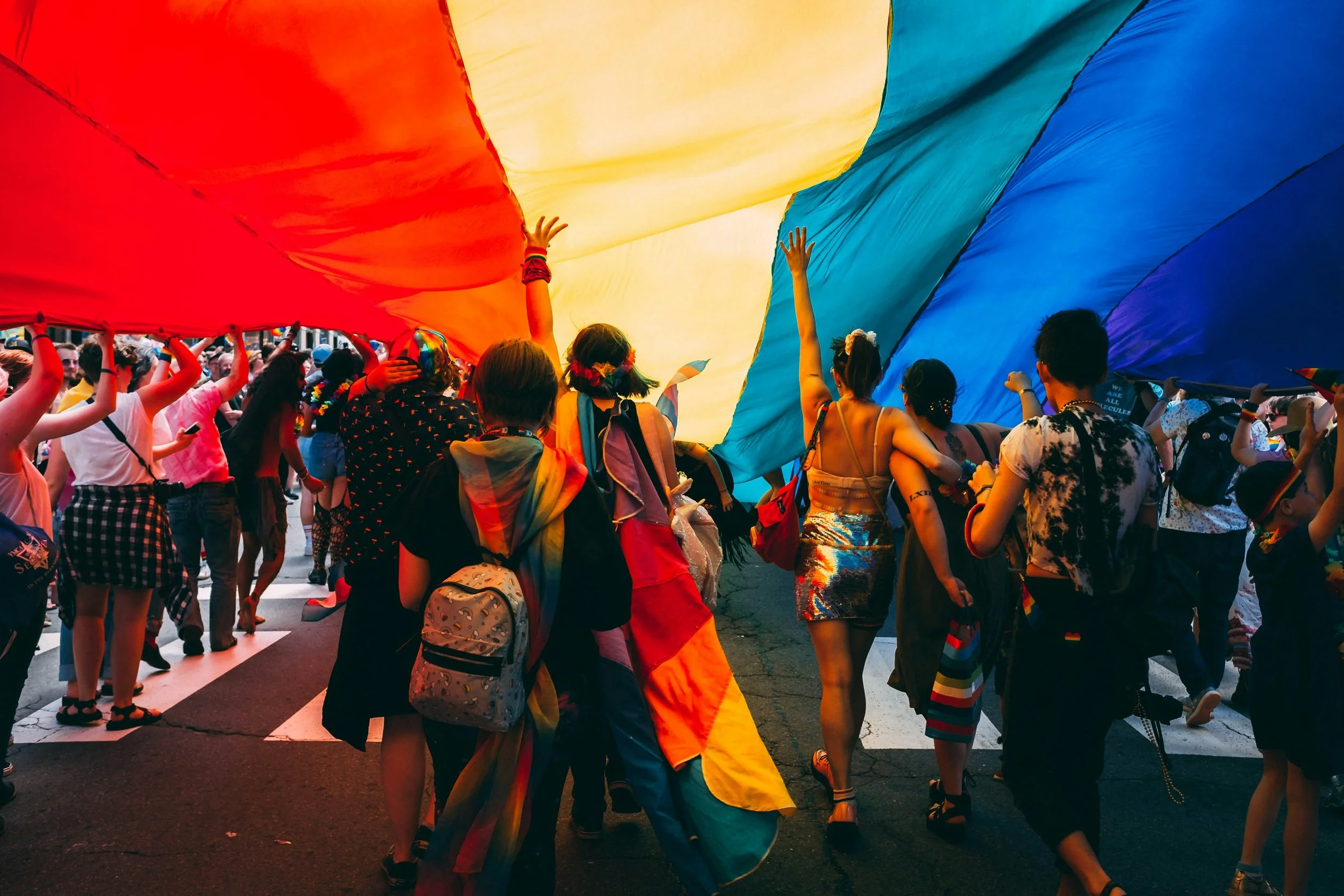
In the midst of Pride Month, let's take time to learn and honor the history of Pride Month and the mental health turmoil’s that persist in correlation to LGBTQ+ discrimination.
June is more than a month of parades and rainbow flags. It is a living memorial, a reminder of how far the LGBTQ+ community has come and how much further there is to go. Pride Month was born from pain, protest, and a refusal to be silenced. And that same pain, in many forms, continues to shape the mental health of LGBTQ+ individuals today.
Understanding this connection between the historical roots of Pride and the modern mental health disparities facing LGBTQ+ people is essential for anyone who wants to offer meaningful support to this community.
Where Pride Began: The Stonewall Uprising of 1969
To understand Pride Month, you have to go back to the early morning hours of June 28, 1969, in New York City's Greenwich Village.
Police raided the Stonewall Inn, a gay bar on Christopher Street — as part of routine law enforcement harassment of LGBTQ+ establishments. At that time, homosexuality was not only socially stigmatized; it was criminalized. Most cities in the United States had laws prohibiting same-sex relationships, and the American Psychiatric Association classified homosexuality as a mental disorder (a classification it did not remove until 1973).
That night, the patrons of the Stonewall Inn fought back. Days of protests and demonstrations followed, and what began as a rebellion against police brutality became the spark for a global civil rights movement. As Britannica documents, the event led to the formation of landmark LGBTQ+ advocacy organizations including the Human Rights Campaign, GLAAD, and PFLAG.
One year later, on June 28, 1970, the first Gay Pride Liberation March took place in Manhattan, commemorating the Stonewall anniversary. Pride celebrations followed in Chicago, San Francisco, and Los Angeles. What was originally called Christopher Street Liberation Day eventually evolved into what we know today as Pride Month.
In 1999, President Bill Clinton officially designated June as Gay and Lesbian Pride Month. In 2009, President Barack Obama expanded this recognition to include the full LGBTQ+ community. In 2016, President Obama designated Stonewall as a national monument.
The word "Pride" itself was a deliberate act of reclamation, a rejection of the shame, secrecy, and exclusion that mainstream society had imposed on the community for generations.
Pride Month and Mental Health: An Inextricable Link
The history of Pride is inseparable from the history of LGBTQ+ mental health. The very conditions that sparked Stonewall criminalization, psychiatric pathologization, and systemic discrimination, have left lasting marks on the psychological wellbeing of LGBTQ+ individuals.
Research consistently shows that LGBTQ+ people experience mental health conditions at significantly elevated rates compared to their cisgender and heterosexual peers. According to data reviewed by the National Alliance on Mental Illness and cited by the Inter-university Consortium for Political and Social Research (ICPSR), LGB adults are more than twice as likely as heterosexual adults to experience mental health conditions such as depression and anxiety.
A large-scale study published in JAMA Network Open (2025), drawing from the All of Us Research Program with over 269,000 participants, found that sexual and gender minority (SGM) subgroups had significantly higher odds of at least four out of ten commonly diagnosed mental health conditions compared to non-SGM counterparts underscoring the need for systemic support, prevention, and early intervention.
The Minority Stress Model: Why Discrimination Harms Mental Health
One of the most important frameworks for understanding LGBTQ+ mental health disparities is the minority stress model, a theory that explains how chronic social stressors rooted in stigma, prejudice, and discrimination negatively impact psychological wellbeing.
These stressors can be distal such as experiencing discrimination, microaggressions, or violence or proximal, including internalized shame, fear of rejection, and identity concealment. Research published in Scientific Reports (2024) found that LGBTQ+ individuals demonstrate approximately 1.5 times the risk of depression observed in heterosexual individuals, alongside elevated rates of anxiety and suicidal ideation.
The Center for American Progress's 2024 survey data found that experiencing discrimination affected the mental wellbeing of 52% of LGBTQ+ adults "significantly or more" rising to 61% for disabled LGBTQ+ adults and 74% for transgender adults.
The Mental Health Numbers: What the Research Tells Us
Depression, Anxiety, and Suicidality
The mental health disparities facing the LGBTQ+ community are not subtle. According to a UCLA study using 2023 California Health Interview Survey data, LGBT adults were nearly three times as likely as non-LGBT adults to have seriously considered suicide in their lifetimes (48% vs. 17%). Among transgender adults specifically, that figure rose to 64%.
LGB populations are also 1.5 times more likely to experience depression, anxiety, and substance use disorders and twice as likely to attempt suicide compared to heterosexual peers, according to a review published in Quality & Quantity (2024).
LGBTQ+ Youth Are Especially Vulnerable
The Trevor Project's 2024 U.S. National Survey on the Mental Health of LGBTQ+ Young People, one of the most comprehensive annual surveys of its kind amplified the experiences of more than 18,000 LGBTQ+ young people ages 13 to 24. It found a significant and persistent association between anti-LGBTQ+ victimization and disproportionately high rates of suicide risk.
A 2026 Trevor Project longitudinal study, tracking 1,689 LGBTQ+ youth over 18 months, found that approximately 55% reported discrimination based on sexual orientation, while 66% of transgender and nonbinary respondents faced discrimination based on gender identity. One-third reported being physically harassed or threatened due to their sexual orientation. Critically, the study confirmed that discrimination, physical threats, and inability to meet basic needs led to higher odds of later anxiety, depression, and suicidal ideation.
The Ongoing Harm of Conversion Practices
A 2024 Stanford Medicine-led study published in The Lancet Psychiatry examined over 4,400 LGBTQ+ participants and found that exposure to conversion practices attempts to change someone's sexual orientation or gender identity was associated with greater symptoms of depression, post-traumatic stress disorder, and suicidality. Those who had been subjected to both types of conversion practices (targeting both sexual orientation and gender identity) experienced the greatest harm.
Barriers to Mental Health Care
Even when LGBTQ+ individuals recognize they need support, accessing care comes with its own set of challenges. Research from King's College London's LGBTQ+ Mental Health Research Group has examined how discrimination within healthcare settings itself acts as a barrier with many LGBTQ+ people reporting experiences of stigma or mistreatment when attempting to access mental health services.
The Trevor Project's 2024 survey found that far too many young LGBTQ+ people continue to struggle to access the mental health care they need. This care gap is especially alarming given the elevated mental health risks documented in the research.
Structural and policy environments also play a role. Anti-LGBTQ+ legislation has been linked to worsening mental health outcomes. Data from national probability samples has shown evidence of declining mental health among sexual minority individuals in the wake of hostile political climates, a pattern particularly pronounced among Black and Latinx LGBTQ+ communities who face intersectional forms of discrimination.
What Affirming Support Looks Like
The research doesn't just document the problem it also points toward solutions. The Trevor Project's longitudinal data showed that affirming actions from family, friends, and supportive environments measurably improved mental health outcomes and reduced suicide risk over time.
LGBTQ+-affirming mental health care means:
Validating identity — affirming a person's sexual orientation and gender identity without reservation or conditions
Understanding minority stress — recognizing how chronic external stressors shape a client's mental health and history
Creating safe, nonjudgmental spaces — where LGBTQ+ individuals do not have to fear stigma or pathologization
Acknowledging intersectionality — recognizing that LGBTQ+ individuals who are also racial minorities, disabled, or low-income face compounded stressors
Supporting access — actively reducing barriers to consistent, culturally competent care
Pride Month as Mental Health Support
Beyond its historical and political significance, Pride Month itself plays a meaningful role in LGBTQ+ mental health. Research has found that LGBTQ+ people who participate in affirming community events report greater sense of belonging, reduced isolation, and stronger identity affirmation all of which are protective factors against depression and suicidality.
Pride is also an opportunity to remember those who came before those whose courage at Stonewall and in the decades that followed made the incremental progress of today possible. As American University's Professor K. Tyler Christensen has described, Pride is both a celebration and a harnessing of energy to continue the work.
But celebration exists alongside ongoing struggle. In 2025 and beyond, the fight for LGBTQ+ mental health equity is not over. Discriminatory policies continue to threaten access to gender-affirming care. Conversion practices have not been federally banned. Suicide risk among LGBTQ+ youth remains disproportionately high. Barriers to affirming mental health care persist.
Seeking Support
If you or someone you love is struggling, affirming mental health care is available. Therapists trained in LGBTQ+ cultural competency can offer support rooted in validation, not judgment.
Crisis Resources:
The Trevor Project Lifeline: 1-866-488-7386 (available 24/7 for LGBTQ+ youth)
Crisis Text Line: Text START to 678-678
988 Suicide & Crisis Lifeline: Call or text 988